
Asprinio Bianco
The ferociously acidic Campanian white grown up poplars on the plain north of Naples.
Asprinio Bianco is a grape variety most associated in Italy with Aversa and Terre del Volturno.
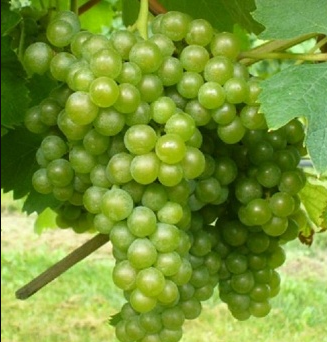
Asprinio is grown on trees. North of Naples the vines run free as much as twenty metres above the ground, strung between poplars and oaks that serve as living supports, in a training system called alberata that turns a vineyard into something closer to jungle. The grape behaves like a wild vine because, in all likelihood, that is very nearly what it is.
What the name says Officially Asprinio Bianco, though everyone says Asprinio, the name comes from the Italian aspro or the Latin asper, meaning tart. Nobody has ever accused this grape of lacking acidity, and for centuries it was bought by producers in Italy and abroad precisely to sharpen up their sparkling wines. Luigi Veronelli thought it the best wine in the world with pizza, provided the pizza was the simplest possible: tomato, garlic and oregano.
Origins and history It was once thought to be a Pinot relative imported by the French in the early eighteenth century. Work by Attilio Scienza’s team at the University of Milan has established that it is genuinely native, most likely arising from the domestication of local wild vines thousands of years ago. A notarised rental agreement of 1495 records the owner receiving two containers of wine, one of them asprinio, and obliging the new tenant to replace every dark grape on the property with Asprinio and Verdesca.
Is it Greco. Asprinio closely resembles Greco, a similarity noted as early as 1804, and both share compound clusters and a marked sensitivity to viral disease. Two studies, in 2005 and 2010, concluded the two were identical; Scienza disputes it, and D’Agata keeps them separate on the grounds that he finds the identity hard to credit. The National Registry also distinguishes them. The question is genuinely unsettled.
In the vineyard Asprinio is extraordinarily vigorous, and growers once took up to two hundred kilos of fruit from a single vine, a figure unheard of for any quality wine grape. It thrives even in heavy shade, which is how the alberata works at all. The population is remarkably homogenous with few if any biotypes, and clones are scarce, unlikely to improve soon because the available vine material is almost entirely virus-affected, fanleaf especially.
Appearance and structure The wine is light and lively, built entirely on acidity. Historically it averaged around 10 per cent alcohol and total acidity of 7.5 grams per litre, where most wines sit below 6. Those numbers are worth holding onto, because they look nothing like the heavier, more alcoholic bottlings that have appeared under the name in recent years.
Aromatic profile A crisp lemony zing runs through everything, with delicate citrus, spice and almond notes behind it. The citrus character has a measurable basis: Asprinio is rich in monoterpenes and norisoprenoids, particularly linalool and limonene. Crucially, those molecules only reach useful concentrations in fruit grown at a certain height off the ground, so heavily shaded grapes, low-trained grapes and those in damp sites never develop the aromatics properly.
In the cellar The heartland is the twenty-two communes of the Asprinio d’Aversa DOC around Caserta, long regarded as the grape’s grand cru. The high natural acidity also supports Asprinio d’Aversa Spumante, though D’Agata prefers the still version. Between 2009 and 2011 the Adolfo Spada estate funded a programme of research across four institutes, explicitly to recover a wine its owner felt was no longer being made as it once had been.
Key expressions
- Asprinio d’Aversa DOC, still, from the historic twenty-two communes.
- Asprinio d’Aversa Spumante, where the acidity does the work.
- Wines from true alberata vines trained high into the trees.
- Low-alcohol, high-acid bottlings made in the historic style.
The question of aging Asprinio is a wine for the year after the vintage and has no ambitions beyond it. The acidity would carry it further, but nothing develops with time and the delicate citrus and almond notes simply fade. Drink it young and cold, which is what it was always for.
At the table Veronelli’s pizza verdict stands, and the same logic extends to fried food generally, to mozzarella di bufala, to anchovies and to simple seafood. The acidity scrubs fat better than almost any other Italian white. Serve it thoroughly chilled, around eight degrees.
Why it matters The alberata vineyards north of Naples are among the most extraordinary sights in European viticulture, a form of vine training that has essentially vanished everywhere else, and they exist because this one grape will grow that way. The wine is modest by design and all the better for it. Losing Asprinio would mean losing the landscape with it.