
Merlot
The great internationalist of Italian viticulture—bringing softness, plum fruit, and approachability to Northeast Italy where it has grown since the 19th century.
Merlot is a grape variety most associated in Italy with Bolgheri, Friuli Colli Orientali, Garda Merlot and Basilicata. I have reviewed 33 wines made from it.
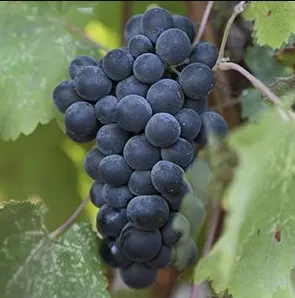
The Great Companion Merlot is the world’s quiet workhorse — the grape that softens, fleshes out and makes approachable. In Italy it plays two very different roles: the humble, everyday red of the north-east, and, in a handful of cult bottlings, one of the most expensive and sought-after wines the country produces.
A Bordeaux Sibling Like Cabernet Sauvignon, Merlot is a child of Cabernet Franc, and a native of Bordeaux’s Right Bank, where it dominates the clay soils of Pomerol and Saint-Émilion. Its name is thought to derive from merlo (the blackbird), perhaps for the bird’s fondness for the early-ripening berries. That early ripening is key to its character: it buds and ripens before Cabernet, making it more reliable in cooler or wetter sites.
Appearance and Structure Merlot gives deeply coloured wines with softer, rounder, more supple tannins than Cabernet and slightly lower acidity. The result is a plusher, more immediately generous texture — the velvet to Cabernet’s iron — which is why the two are so often blended together.
Aromatic Profile Expect plum, black cherry and blackberry, with notes of chocolate, fruitcake, dried fig and, from cooler northern Italian sites, a fresh herbal, leafy edge. Oak adds mocha and sweet spice. Ripe versions are rich and fleshy; cooler-climate versions are leaner, more savoury and red-fruited.
A Grape of Two Italys In Friuli, the Veneto and Trentino, Merlot is planted in vast quantity as a friendly, fruit-driven everyday wine — soft, juicy and inexpensive. But on the right soils, treated with ambition, it transforms: Tuscany’s clay-rich pockets have produced varietal Merlots — Masseto foremost among them — that rank among the most prestigious wines in the world.
In the Cellar Merlot’s pliability makes it a winemaker’s grape. As a blending partner it lends flesh and approachability to firmer varieties; as a varietal it ranges from unoaked, juicy and simple to barrique-aged, concentrated and built for the cellar. Its softer tannins integrate oak quickly, giving polished, rounded wines.
Key Expressions
- Friuli & the Veneto: the everyday heartland — soft, plummy, gulpable reds, rising to serious quality in Friuli Colli Orientali.
- Bolgheri & the Tuscan coast: as a key blending partner in Super Tuscan reds and, on the finest clay, as a profound varietal wine.
- Trentino-Alto Adige: cooler, fresher, more herbal styles.
The Question of Aging Most Merlot is made to drink young, within three to five years, while its fruit is plush and primary. But the top Tuscan examples, with their concentration and structure, age for two decades or more, gaining complexity of dried fruit, truffle, tobacco and cedar.
At the Table Merlot’s softness makes it one of the most flexible reds at the table — forgiving where tannic wines fight the food. It pairs with roast poultry, pork, veal, mushroom dishes, medium-aged cheeses and tomato-based pastas. The plusher styles flatter richer meats.
Why Merlot Matters Often dismissed as a soft option, Merlot is in truth one of the most versatile grapes in Italy — capable of providing both the country’s friendliest weeknight reds and, in rare hands, some of its most coveted treasures. Its genius lies in its generosity.
A Question of Reputation Few grapes have ridden such swings of fashion. For a time Merlot was the world’s most planted fine-wine grape, beloved for its softness; then a backlash, fuelled by a famous film, cast it as the bland choice. The truth lies in between and is especially clear in Italy, where the grape ranges from anonymous bulk wine to genuinely profound bottlings. The lesson is that Merlot is only as good as the site and the ambition behind it: planted carelessly for volume it is forgettable, but grown on the right clay and treated with seriousness it can produce some of Italy’s most coveted and long-lived reds.
Reviews for Merlot
Show 24 more reviews
- 2022 Planeta “La Segreta” Terre Siciliane Rosso90
- 2023 Tenuta Dell Ornellaia Ornellaia Toscana97
- 2023 Tenuta Sette Ponti “Oreno” Toscana95
- 2023 Tenuta San Guido “Guidalberto” Toscana93
- 2009 Gravner “Rujno” Rosso99
- 2024 Lornano Helena Toscana Igt96
- 2021 Petra Toscana Rosso96
- 2023 Petrolo “Galatrona” Toscana98
- 2021 Castello di Ama “L’Apparita” Toscana100
- 2019 Malgiacca ‘Malgiacca’ Super Tuscan96
- 2022 Antinori “Guado al Tasso” Bolgheri Superiore97
- 2018 Tenuta Roveglia Garda Merlot90
- 2018 Sportoletti Villa Fidelia Rosso94
- 2018 La Pace “Pittoresco” Super Tuscan90
- 2020 Le Macchiole “Messorio”98
- 2018 Castello di Ama “Vigneto Bellavista” Chianti Classico Gran Selezione98
- 2022 Tenuta Sette Ponti “Oreno” Toscana92
- 2022 Tua Rita “Redigaffi” Toscana99
- 2022 Tenuta di Carleone “Il Randagio” Toscana91
- 2020 Ca’ del Bosco Maurizio Zanella Rosso Del Sebino IGT93
- 2020 Tenuta di Biserno “Biserno” Toscana97
- 2021 Caiarossa “Caiarossa” Toscana97
- 2006 Maculan “Fratta” Cabernet-Merlot Veneto Rosso96
- 1985 Antinori “Solaia” Toscana98