
Cabernet Franc
The elegant, herbaceous backbone of Italy's Bordeaux-inspired blends, producing wines of particular finesse in Friuli and the Northeast.
Cabernet Franc is a grape variety most associated in Italy with Collio Goriziano, Friuli Colli Orientali, Montello Rosso and Bolgheri. I have reviewed 24 wines made from it.
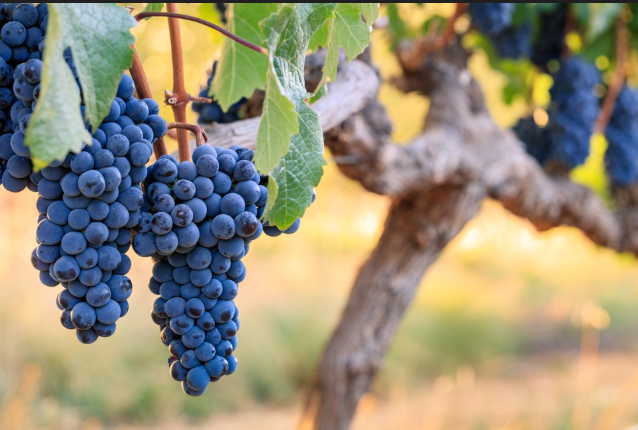
The Elder Statesman Cabernet Franc is the quieter, more aromatic parent of both Cabernet Sauvignon and Merlot — a grape that lends perfume, freshness and a distinctive savoury edge wherever it grows. In Italy it has a long and slightly tangled history in the cool north-east, and a starring role in the Bordeaux-style blends of the Tuscan coast, where it is increasingly prized as a varietal wine in its own right. It is a grape that rewards attention: less obviously powerful than its famous offspring, but more fragrant, more nuanced and, to many, more complete.
A Bordeaux Heritage Native to the south-west of France and the Loire, Cabernet Franc is one of the founding varieties of the Bordeaux blend and the genetic parent — through separate crossings — of both Cabernet Sauvignon and Carmenère. It buds and ripens earlier than Cabernet Sauvignon, a small but decisive difference that makes it better suited to cooler and more marginal sites, and explains why it took so naturally to north-eastern Italy.
A Case of Mistaken Identity For much of the 20th century, a great deal of what was bottled as Cabernet Franc in Friuli and the Veneto was in fact Carmenère, the two grapes having been confused in the vineyard for generations. DNA profiling has since untangled them, but the episode explains the markedly herbaceous, sometimes leafy character long associated with north-eastern Italian “Cabernet” — and the ongoing project among growers to identify and replant true Cabernet Franc.
Appearance and Structure Lighter in colour and gentler in tannin than Cabernet Sauvignon, Cabernet Franc gives medium-bodied, fresh, aromatic reds. Its acidity is bright and its tannins are fine and silky rather than firm, making it more approachable in youth while still capable of real ageing in the best examples. It is a wine of finesse and lift rather than sheer mass.
Aromatic Profile The signature is red fruit — raspberry and red cherry — lifted by violet, graphite, pencil shaving and a green, leafy note of bell pepper and tomato leaf that comes from the grape’s natural pyrazines, most pronounced in cooler sites or under-ripe fruit. Riper expressions add blackcurrant, dried tobacco leaf and a warm, savoury earthiness, while bottle age brings cedar and sweet spice.
A Grape of Cool Hillsides Because it ripens earlier than Cabernet Sauvignon, Cabernet Franc thrives where the latter would struggle, on cooler hillsides and in more marginal climates. Exposure and ripeness are everything: fully ripe, it is perfumed, svelte and gently spicy; under-ripe, the green pyrazine character can dominate and turn aggressively vegetal. Site selection and canopy management are therefore central to growing it well.
In the Cellar Italian Cabernet Franc is made in two broad modes — as a fresh, lightly oaked varietal that showcases its aromatic lift, and as a more serious, barrique-aged wine, particularly on the Tuscan coast, where it gains structure, density and depth. As a blending grape it brings perfume, freshness and aromatic complexity to Bordeaux-style cuvées, balancing the power of Cabernet Sauvignon and the flesh of Merlot.
Key Expressions
- Friuli (Collio & Colli Orientali): fresh, aromatic, gently herbaceous varietal reds of real character.
- The Veneto: widely planted, from everyday reds to more structured hillside bottlings.
- Bolgheri & the Tuscan coast: a perfuming, structuring component of Super Tuscan blends.
- Cult varietals: a small number of single-variety Tuscan Cabernet Francs now rank among Italy’s most admired reds.
The Question of Aging While much Cabernet Franc is delicious young, the best examples — particularly the structured Tuscan varietals — age gracefully for a decade or more, their leafy youthfulness mellowing into cedar, tobacco, dried herb and sweet earth. The grape’s bright acidity acts as a natural preservative, keeping aged examples lively rather than tired.
At the Table Its freshness and moderate tannin make it remarkably versatile: roast and grilled meats, herb-crusted lamb, charcuterie, mushroom dishes and medium-aged cheeses. The herbal edge flatters green vegetables, peppers and rosemary in a way few reds can manage, making it a thinking diner’s red.
Why It Matters Cabernet Franc is the connoisseur’s Cabernet — less powerful but more perfumed than its famous offspring, and a grape that adds elegance, lift and savoury complexity to some of Italy’s finest modern reds, from the cool hills of Friuli to the warm terraces of the Tuscan coast.
Reviews for Cabernet Franc
Show 15 more reviews
- 2023 Tenuta Sette Ponti “Oreno” Toscana95
- 2020 Ca’ Marcanda (Gaja) “Camarcanda” Bolgheri95
- 2021 Ca’ Marcanda (Gaja) “Camarcanda” Bolgheri96
- 2021 Gaja Ca Marcanda Magari97
- 2022 Antinori Tignanello Toscana96
- 2022 San Guido “Sassicaia” Bolgheri98
- 2021 Petra Toscana Rosso96
- 2022 Antinori Solaia96
- 2022 Antinori “Guado al Tasso” Bolgheri Superiore97
- 2018 La Pace “Pittoresco” Super Tuscan90
- 2022 Tenuta Sette Ponti “Oreno” Toscana92
- 2022 Tenuta di Carleone “Il Randagio” Toscana91
- 2020 Ca’ del Bosco Maurizio Zanella Rosso Del Sebino IGT93
- 2020 Tenuta di Biserno “Biserno” Toscana97
- 2021 Caiarossa “Caiarossa” Toscana97