
Carmenère
Once thought extinct in Italy, small plantings of this Bordeaux refugee survive in Friuli and Veneto, producing aromatic, medium-bodied reds.
Carmenère is a grape variety most associated in Italy with Montello Rosso and Lison. I have reviewed one wine made from it.
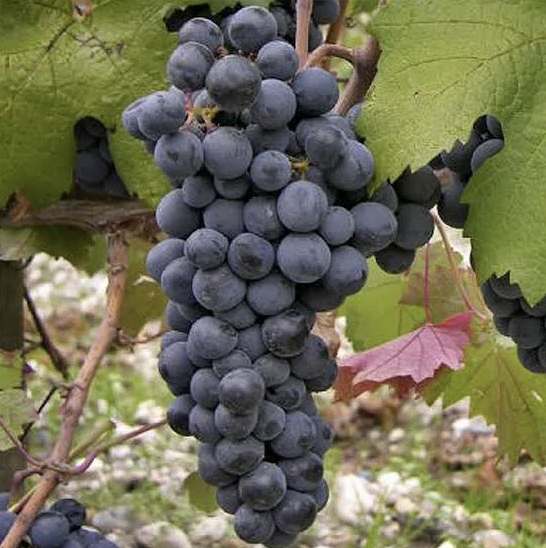
The Rediscovered Bordeaux Grape Carmenère is an old Bordeaux red variety with a remarkable history of mistaken identity, long grown in north-eastern Italy under the name of other grapes. Deeply coloured, herbaceous and gently structured, it produces characterful reds in Friuli and the Veneto, where it has quietly thrived for over a century. Its story is one of confusion and rediscovery, and it remains one of the more intriguing of Italy’s international red varieties.
A Bordeaux Native Carmenère is one of the historic grapes of Bordeaux, where it was once widely planted before phylloxera and changing fashions reduced it almost to extinction in France. A relative of Cabernet and a late-ripening variety, it struggled in Bordeaux’s marginal climate, and it was in the New World — and, as it turned out, in Italy — that the grape survived and found new homes far from its origin.
A Case of Mistaken Identity For more than a century, much of what was grown and bottled as Cabernet Franc in Friuli and the Veneto was in fact Carmenère, the two having been confused in the vineyard since the 19th century. Only modern DNA profiling untangled the mix-up — most famously also revealing that Chile’s “Merlot” was largely Carmenère — and growers in the north-east have since identified and embraced their true Carmenère.
In the Vineyard A late-ripening variety that needs warmth and a long season to ripen fully, Carmenère can show aggressively green, herbaceous flavours when under-ripe, so site selection and full maturity are essential. In the warmer, well-exposed sites of Friuli and the Veneto it ripens to give deeply coloured, characterful wines, with careful farming key to taming its herbaceous streak.
Appearance and Structure Carmenère gives deeply coloured, medium to full-bodied wines with moderate, supple tannins and fresh acidity. It combines dark fruit and depth of colour with a distinctive herbaceous, savoury character, producing reds that are structured yet approachable, with a leafy, spicy edge that sets them apart from their Cabernet and Merlot relatives.
Aromatic Profile The signature is dark fruit — blackberry and black plum — framed by a pronounced green, herbaceous note of bell pepper, tomato leaf and dried herbs, along with spice, tobacco and a savoury earthiness. The herbaceous character, from the grape’s natural pyrazines, is especially distinctive, giving the wines a leafy, peppery lift over their dark fruit.
In the Cellar Carmenère is made both as a fresh, fruit-driven varietal and as a more structured, oak-aged wine, as well as a component in Bordeaux-style blends. The winemaker’s aim is usually to balance its dark fruit and herbaceous character, using full ripeness and judicious oak to soften the green edge while preserving the grape’s distinctive savoury personality.
Key Expressions
- Friuli & the Veneto: the historic heartland — deeply coloured, herbaceous, characterful varietal reds.
- Bordeaux-style blends: a colouring, savoury component in north-eastern cuvées.
- Modern identified bottlings: wines now correctly labelled Carmenère after the DNA revelations.
- Warm-site varietals: riper, rounder expressions where the grape achieves full maturity.
The Question of Aging Much Carmenère is enjoyed relatively young for its dark fruit and herbaceous character, but the best structured and oak-aged examples can age for several years, the green edge mellowing as the dark fruit deepens into leather, tobacco, dried herbs and a savoury, earthy complexity.
At the Table Its dark fruit, supple tannin and herbaceous character make Carmenère a versatile food red: roast and grilled meats, herb-crusted dishes, peppers and grilled vegetables, cured meats and medium cheeses. The leafy, savoury edge flatters herb-rich and vegetable-forward cooking especially well.
Why It Matters Carmenère is one of Italy’s great cases of vinous rediscovery — a historic Bordeaux grape that survived for over a century in the north-east under a false name, and which, now correctly identified, adds a distinctive, herbaceous, characterful red to the wines of Friuli and the Veneto.