
Cabernet Sauvignon
The international benchmark red—bringing structure, dark fruit, and aging potential to both varietal wines and the celebrated Super Tuscans.
Cabernet Sauvignon is a grape variety most associated in Italy with Bolgheri, Bolgheri Sassicaia, Carmignano and Colli di Conegliano. I have reviewed 39 wines made from it.
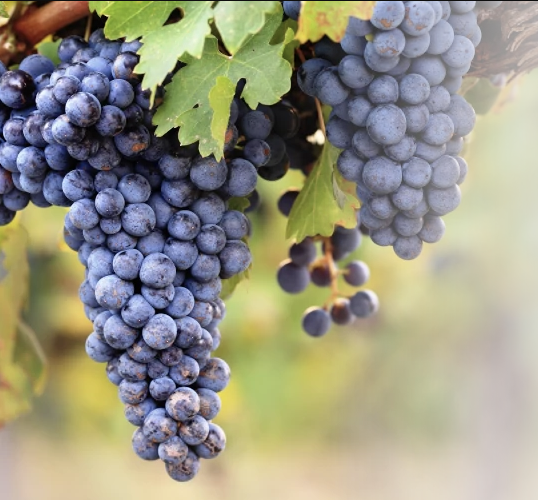
The International King in Italy Cabernet Sauvignon is the world’s most famous red grape, and though it is a relative newcomer to Italy, it has reshaped the country’s fine-wine landscape more than any other foreign variety. Its arrival on the Tuscan coast in the 20th century gave birth to the “Super Tuscans” and proved that Italy could make blue-chip reds outside its native-grape traditions.
A Bordeaux Native A natural cross of Cabernet Franc and Sauvignon Blanc — a parentage only confirmed by DNA testing in 1996 — Cabernet Sauvignon emerged in 17th-century Bordeaux. Its thick skins, small berries and late ripening give wines of deep colour, firm tannin and remarkable longevity, and a flavour signature so recognisable it has become the international benchmark for “serious” red wine.
Appearance and Structure Deeply pigmented, near-opaque purple-black in youth, Cabernet is built on a frame of substantial tannin and moderate-to-high acidity. In Italy’s warmer coastal sites it ripens fully and reliably, yielding wines of power and density that nonetheless retain freshness when grown at altitude or near the sea.
Aromatic Profile The varietal signature is blackcurrant (cassis), blackberry and dark plum, framed by cedar, graphite, tobacco, bell pepper and — especially from cooler sites — a leafy, herbaceous note. Oak ageing, almost universal, adds vanilla, cocoa and sweet spice. With time it gains pencil shavings, cigar box and dried herbs.
A Grape that Travels Unlike Italy’s terroir-obsessed natives, Cabernet is adaptable and consistent, which is precisely why it conquered the world. In Italy it performs best in Bolgheri and the wider Tuscan coast, where maritime warmth and well-drained soils echo — and arguably surpass — its Bordeaux home. It is also widely planted across Friuli, the Veneto and the south as a blending and varietal grape.
In the Cellar Cabernet is built for barrel ageing; its tannins integrate with French oak over 18–24 months in barrique. In Italy it appears both as a varietal wine and, more famously, in blends — with Merlot and Cabernet Franc in the Bordeaux mould, or, controversially, blended with Sangiovese to create a uniquely Tuscan hybrid style.
Key Expressions
- Bolgheri: the spiritual home of Italian Cabernet, where Sassicaia first proved the grape’s potential and a now-legendary appellation grew up around it.
- Super Tuscans: coastal and inland Tuscan blends that broke free of DOC rules to combine Cabernet with Merlot, Sangiovese and Cabernet Franc.
- Friuli & the Veneto: cooler, more herbaceous, structured styles.
- The South: ripe, generous, fruit-forward expressions, often blended with native grapes.
The Question of Aging Few grapes age as dependably. Cabernet’s tannin and acid scaffold allows the top Bolgheri wines to evolve for two or three decades, the primary cassis fruit slowly giving way to cedar, leather, tobacco and dried herb. It is the backbone of many of Italy’s most age-worthy and collectible modern reds.
At the Table Its firm tannins call for protein and fat: grilled and roasted red meat, bistecca, lamb, hard aged cheeses and rich game. The herbaceous edge flatters rosemary and grilled vegetables. It is a wine for the centre of the plate.
Why It Matters in Italy Cabernet Sauvignon’s Italian story is one of transformation: it freed a generation of producers from rigid tradition, created the Super Tuscan phenomenon, and showed the world that Italy could compete at the very top of the international fine-wine market — all while teaching Italian winemakers to think anew about their own native grapes.
The Sassicaia Story No account of Italian Cabernet is complete without Sassicaia, the wine that started it all. Planted by Mario Incisa della Rocchetta at Tenuta San Guido on the then-obscure Tuscan coast, this Bordeaux-style red was for years drunk only privately by the family before its commercial release. When it triumphed against famous French Cabernets in a now-legendary international tasting, the wine world was forced to take Italy’s coast seriously. Sassicaia’s success gave birth to the entire Super Tuscan movement and ultimately to the Bolgheri appellation, proving that Cabernet Sauvignon could reach the very highest level on Italian soil — a revolution from a single visionary vineyard.
Reviews for Cabernet Sauvignon
Show 30 more reviews
- 2023 Tenuta San Guido “Sassicaia” Bolgheri97
- 2023 Giuseppe Quintarelli “Primofiore” Veneto93
- 2017 Giuseppe Quintarelli “Alzero” Cabernet92
- 2023 Tenuta Sette Ponti “Oreno” Toscana95
- 2023 Tenuta San Guido “Guidalberto” Toscana93
- 2009 Gravner “Rujno” Rosso99
- 2019 Gaja “Darmagi” Cabernet Sauvignon Langhe94
- 2020 Ca’ Marcanda (Gaja) “Camarcanda” Bolgheri95
- 2021 Ca’ Marcanda (Gaja) “Camarcanda” Bolgheri96
- 2024 Lornano Helena Toscana Igt96
- 2022 Antinori Tignanello Toscana96
- 2022 San Guido “Sassicaia” Bolgheri98
- 2021 Petra Toscana Rosso96
- 2021 Fèlsina “Maestro Raro” Toscana IGT Cabernet Sauvignon96
- 2022 Antinori Solaia96
- 2022 Antinori “Guado al Tasso” Bolgheri Superiore97
- 2018 Sportoletti Villa Fidelia Rosso94
- 2018 La Pace “Pittoresco” Super Tuscan90
- 2022 Tenuta Sette Ponti “Oreno” Toscana92
- 2020 Ca’ del Bosco Maurizio Zanella Rosso Del Sebino IGT93
- 2018 Planeta Burdese Sicilia Cabernet Sauvignon90
- 2022 Montepeloso “Eneo” Toscana95
- 2020 Fèlsina Maestro Raro Toscana IGT Cabernet Sauvignon96
- 2020 Tenuta di Biserno “Biserno” Toscana97
- 2021 Caiarossa “Caiarossa” Toscana97
- 2020 Piaggia Carmignano Riserva97
- 2006 Maculan “Fratta” Cabernet-Merlot Veneto Rosso96
- 1985 Antinori “Solaia” Toscana98
- 2018 Tenuta Monteti “Caburnio”90
- 2021 Antinori “Tignanello” Toscana97