
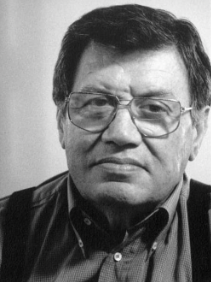
Schiopetto: The Man Who Invented Modern Italian White Wine
If we’re being honest, before the 1960s, Italian white wine was often a bit of a mess. It was largely
Schiopetto: The Man Who Invented Modern Italian White Wine Read Post »
he white wine holy land—a crescent of hills on the Slovenian border producing Italy’s most complex, structured whites.

Zones: regional wine-zone data of Piemonte, Toscana, Veneto, Lombardia, Lazio and Bolzano (CC BY / CC0), EU wine PDO boundaries (Candiago et al. 2022, CC0), production rules drawn with ISTAT boundaries; vineyards: Regione Piemonte (CC BY 4.0), Regione Toscana land use 2019 (CC BY 4.0); geology: Regione Toscana DataBase Geologico (CC BY 4.0), Arpa Piemonte - Geoportale / CNR-IGG GeoPiemonte Map 1:250,000 (CC BY 4.0); places: GeoNames (CC BY 4.0), OpenStreetMap (ODbL). Imagery: Powered by Esri — Esri, Maxar, Earthstar Geographics. Terrain: © Mapterhorn.
Approximate zone drawn from the production rules · Italian wine map · Regional map (Federdoc) · Imagery: Powered by Esri
A crescent of hills in Gorizia province, straddling the border with Slovenia — one of the most celebrated white wine zones in Italy and the birthplace of the “Super White” movement that transformed Italian winemaking in the 1970s and 80s. The soils, wines, and producers here have no real parallel in the country.
The Terroir Ponca — stratified layers of Eocene marl and sandstone that crumble easily, drain freely, and impart a distinctive saline, chalky mineral backbone to every wine grown on them. The proximity to the Adriatic (via the Vipava valley gap) moderates temperatures and keeps humidity in check, allowing grapes to ripen slowly and fully without losing acidity.
The Wines Collio excels at both single-variety whites (Sauvignon Blanc of arresting mineral tension, Pinot Grigio of real texture, Ribolla Gialla of startling energy) and at the Collio Bianco blend — a masterclass in combining Friulano’s weight, Ribolla’s acidity, and Malvasia Istriana’s aromatic complexity into something greater than any single variety alone.
Gravner and the Amber Wine Revolution: Joško Gravner’s decision in the late 1990s to ferment Ribolla Gialla in Georgian amphorae with extended skin contact launched the global natural wine and orange wine movement. His wines — now aged six years before release — are among the most profound and polarizing in Italy.
Grape Varieties Whites dominate almost completely, and the zone treats them as equals rather than ranking natives above imports:
The Critical Take The Collio Bianco blend is the soul of the zone. Gravner defined the avant-garde; Schiopetto and Edi Keber define the classical.
At the Table Collio whites have the weight for a real table rather than an aperitivo: prosciutto di San Daniele, frico, roast pork, guinea fowl, and the sheep’s and cow’s milk cheeses of the Carnia. The blends and the skin-contact wines want richer cooking still — braised meat, mushroom, aged montasio — and Gravner’s Ribolla is best treated as a red would be. Serve everything warmer than instinct suggests, 12–14°C, and use a proper glass; over-chilled, these wines lose exactly the texture that makes them worth the money.
Benchmark Producers Gravner, Schiopetto, Primosic, Edi Keber.
If we’re being honest, before the 1960s, Italian white wine was often a bit of a mess. It was largely
Schiopetto: The Man Who Invented Modern Italian White Wine Read Post »
This is not just a wine; it is a benchmark for Friulano. The ‘M’ stands for Mario, and it is
Please, erase everything you know about “supermarket Pinot Grigio.” This is the real deal. In the hands of Schiopetto, Pinot
Schiopetto’s Sauvignon is not like New Zealand or Sancerre. It is distinctly Friulian. It has the varietal “green” notes—tomato leaf,
This is the signature wine of the estate and the region. If you want to understand Friuli, you start here.