
Chardonnay
The world's most recognized white grape, producing wines of great variety in Italy—from lean, mineral Trentino to rich, oak-influenced Super Whites.
Chardonnay is a grape variety most associated in Italy with Franciacorta, Trento, Sicilia and Alto Adige. I have reviewed 14 wines made from it.
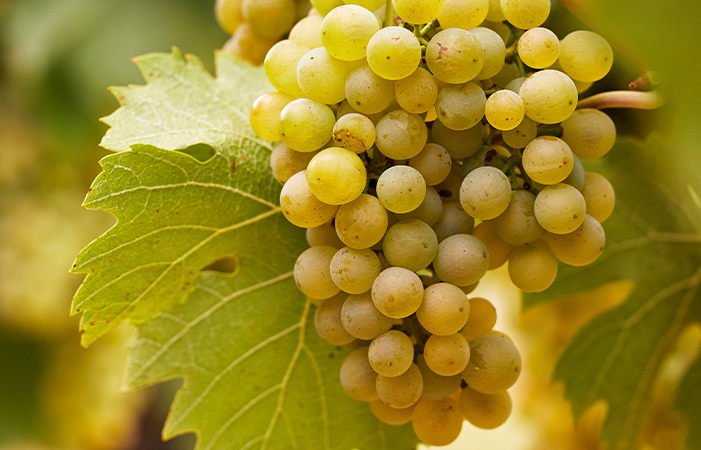
The World’s White Chameleon Chardonnay is the most planted and most versatile white grape on earth, a near-neutral canvas that takes its character as much from where it grows and how it is made as from the grape itself. In Italy it is both a serious still wine and, crucially, the backbone of the country’s finest traditional-method sparkling wines. No other white variety adapts so completely to the intentions of the grower and winemaker, which is the secret of both its triumph and its controversy.
A Burgundian Native Born in Burgundy as a natural cross of Pinot Noir and the obscure Gouais Blanc, Chardonnay is early-ripening, adaptable and reliable. It grows happily from the cool foot of the Alps to warm Sicily, which is precisely the source of both its global success and the stylistic confusion that surrounds it. Wherever vines will grow, Chardonnay can be made — though only in the right places does it make something memorable.
Appearance and Structure Medium-bodied to rich, with moderate acidity that climbs in cooler sites and softens in the warmth. Its texture ranges from lean and crystalline to broad and creamy depending on ripeness, lees contact and oak — making winemaking style, as much as place, the defining variable. This malleability is why two Chardonnays can taste like entirely different wines.
Aromatic Profile Unoaked and cool-grown, it shows green apple, citrus, pear and white flowers with a mineral edge; riper, it gains peach, melon and tropical fruit; oak-aged and through malolactic fermentation, it adds butter, hazelnut, vanilla and brioche. This sheer breadth of possible expression is its defining trait and the source of its enduring popularity.
A Grape for Every Climate Chardonnay’s adaptability lets it express the cool precision of an alpine valley and the generous ripeness of the Mediterranean with equal ease. In Italy its finest still wines come from the north, where altitude and cool nights preserve acidity and lend the wines tension and length, while warmer southern sites give rounder, fruitier styles for earlier drinking.
In the Cellar Italian winemakers exploit the grape’s full stylistic range — pristine stainless-steel whites that prize freshness, Burgundian barrel-fermented bottlings with creamy depth, and, above all, the long-aged base wines of metodo classico sparkling production, where Chardonnay provides finesse, structure and ageability. The choice of oak, lees ageing and malolactic fermentation defines the final character.
The Sparkling Heart of Italy Chardonnay’s most important Italian role is in the country’s top traditional-method sparkling wines. It is the dominant grape of Franciacorta in Lombardy and a cornerstone of Trentodoc in the Alps, where its bright acidity and capacity for autolytic, bottle-aged complexity make it the natural backbone of Italy’s answer to Champagne.
Key Expressions
- Alto Adige & Friuli: taut, fresh, mineral, citrussy still whites of great precision.
- Piedmont & the Langhe: richer, often oak-fermented, Burgundian in ambition.
- Franciacorta: the dominant grape of Italy’s leading metodo classico sparkling wine.
- Trentodoc: high-altitude Trentino sparkling wines built on Chardonnay’s backbone.
The Question of Aging Lean, unoaked styles are best young, but barrel-fermented Italian Chardonnay and vintage Franciacorta can age beautifully for a decade or more, developing nutty, honeyed, toasty complexity while keeping their line of acidity. The best sparkling versions, in particular, reward extended cellaring.
At the Table Its versatility makes it a natural with creamy pastas, risotto, roast chicken, white fish and soft cheeses; richer oaked styles flatter lobster and butter sauces, while crisp sparkling versions are aperitif and seafood wines par excellence. Few whites pair across so wide a range of dishes.
Why It Matters Chardonnay proves that “international” need not mean uniform: in Italy’s hands it ranges from alpine minerality to the toasty depth of world-class sparkling wine, demonstrating the country’s mastery of both still and bottle-fermented white wine.