
Pinot Nero
Burgundy's great nomad finding surprising Italian homes in Alto Adige and Franciacorta, where cool climates coax elegant, transparent expressions of this notoriously difficult grape.
Pinot Nero is a grape variety most associated in Italy with Emilia-Romagna, Oltrepò Pavese, Oltrepò Pavese Metodo Classico and Alta Langa. I have reviewed six wines made from it.
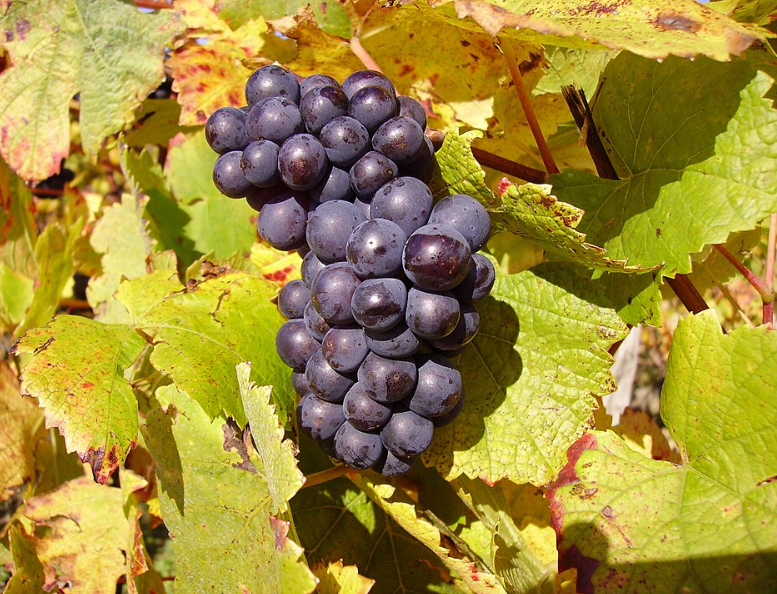
The Heartbreak Grape in Italy Pinot Nero — Pinot Noir, as the rest of the world knows it — is the great red grape of Burgundy and one of the most difficult and rewarding varieties a grower can attempt. In Italy it is a specialist’s grape, demanding cool sites, patience and precision, but in the right hands across the north it produces elegant, perfumed reds and forms the backbone of some of the country’s finest sparkling wines. It is a grape that punishes carelessness and rewards devotion.
A Burgundian Native Ancient and genetically unstable, Pinot Noir is one of the oldest cultivated grape varieties and a parent, through natural crossings, of many others. It is thin-skinned, early-ripening and notoriously sensitive to site and climate, prone to disease and to losing its delicate aromatics in too much heat. This fragility is precisely why it expresses terroir so transparently, and why it is so hard to grow well.
Appearance and Structure Pinot Nero gives lightly coloured, translucent reds with fine, silky tannins and bright acidity — the opposite of dark, powerful, tannic wine. Its appeal lies not in mass but in perfume, texture and finesse: a wine that seduces rather than overwhelms, and that reveals its quality in subtlety rather than size.
Aromatic Profile The signature is red fruit — cherry, raspberry and wild strawberry — lifted by rose, violet, dried herbs and, with age, undergrowth, mushroom, game and forest floor. The best examples possess an ethereal, shifting complexity that evolves in the glass, while cooler Italian sites lend a fresh, red-fruited, mineral character.
A Grape of Cool Northern Sites Pinot Nero needs cool climates and a long, gentle growing season to ripen without losing its delicacy. In Italy it finds its homes in the high valleys of Alto Adige, the hills of Oltrepò Pavese in Lombardy, parts of Franciacorta and Trentino, and pockets of Friuli — sites where altitude and cool nights preserve its perfume and acidity.
The Double Life: Still and Sparkling Pinot Nero plays two crucial roles in Italy. As a still red it makes elegant, Burgundian-styled wines, especially in Alto Adige. As a sparkling-base grape it is fundamental to Italy’s metodo classico industry — the leading red variety of Oltrepò Pavese and an important component of Franciacorta and Trentodoc, where it adds structure, body and depth to the blend.
In the Cellar Pinot Nero demands a gentle hand: careful, restrained extraction to avoid harshness, and judicious use of oak — usually older or larger barrels — to support rather than mask its delicate fruit. For sparkling wine, it is often pressed as a white and blended, contributing weight and longevity to the finished cuvée.
Key Expressions
- Alto Adige: Italy’s benchmark still Pinot Nero — elegant, perfumed, Burgundian in spirit.
- Oltrepò Pavese (Lombardy): both characterful still reds and the heart of its metodo classico sparkling wine.
- Franciacorta & Trentodoc: a structuring component of Italy’s top traditional-method sparkling wines.
The Question of Aging The best still Pinot Nero ages gracefully for a decade or more, its red fruit slowly giving way to savoury, earthy, gamey complexity, while vintage sparkling wines built on the grape gain toasty, autolytic depth with extended time on the lees and in bottle.
At the Table Its delicacy and acidity make it wonderfully versatile: roast poultry and game birds, salmon and tuna, mushroom and truffle dishes, charcuterie and soft cheeses. It is one of the few reds that flatters fish, bridging the gap between red and white wine roles.
Why It Matters Pinot Nero is the connoisseur’s challenge and reward — a grape that, even in small quantities across Italy’s cool north, produces wines of rare elegance and forms the indispensable backbone of the country’s finest sparkling wines.