
Pinot Grigio
Italy's most exported white—from mass-market neutral to copper-tinged, structured Ramato of Friuli, spanning an extraordinary range of styles and quality levels.
Pinot Grigio is a grape variety most associated in Italy with Delle Venezie, Emilia-Romagna, Oltrepò Pavese and Valdadige. I have reviewed six wines made from it.
Italy’s Global White Pinot Grigio is the most famous Italian white wine in the world, a name that has become synonymous with light, dry, easy-drinking white. Yet behind the ocean of simple, commercial bottlings lies a grape of genuine quality and intriguing versatility, capable in the right hands and the right places of producing whites of real character, texture and depth. To know Pinot Grigio properly is to look past its mass-market reputation.
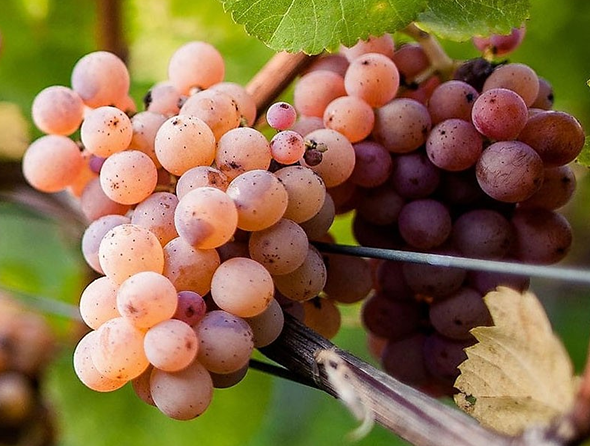
A Pinot Family Member Pinot Grigio — Pinot Gris in France — is a greyish-pink-skinned mutation of Pinot Noir, part of the same great family as Pinot Bianco and Pinot Nero. Its unusually coloured skins are key to its character and to one of its most distinctive styles, and they allow the grape to be made as everything from a pale, crisp white to a deeper, more textured wine.
A Global Phenomenon Pinot Grigio’s rise to international fame is one of the great commercial wine stories of recent decades. From the 1980s onward, light, crisp, affordable Italian Pinot Grigio conquered export markets the world over, becoming a byword for approachable white wine — a success so vast that it now drives plantings across the fertile plains of north-eastern Italy.
In the Vineyard The grape’s character depends enormously on where and how it is grown. On the fertile, high-yielding plains of the Veneto it gives light, neutral wine in great volume; on the poorer, cooler hillsides of Alto Adige and Friuli, with restrained yields, it ripens more slowly and develops the concentration, texture and minerality of a far more serious white.
Two Faces of the Grape Pinot Grigio thus lives a double life. The dominant international style is pale, light, neutral and inexpensive — pleasant but rarely memorable. The other face, from the hillsides of the far north-east, is altogether more serious: textured, mineral, concentrated whites that reveal the grape’s true and often overlooked potential.
Aromatic Profile The signature is pear, green and yellow apple, citrus and white flowers, with notes of almond, white peach and a subtle mineral, sometimes smoky character in the better examples. Simple versions are light and fresh; serious ones add stone fruit, spice and a textured, saline depth.
The Ramato Tradition One of Pinot Grigio’s most distinctive styles is ramato — “coppery” — made by leaving the pink-skinned grapes in contact with their skins, giving a deeper, copper-tinged colour and a richer, more textured, gently tannic wine. This traditional Friulian style, increasingly revived, shows a completely different and compelling side of the grape.
Key Expressions
- Alto Adige: the benchmark — textured, mineral, concentrated whites of real quality.
- Friuli (incl. ramato): serious, gastronomic styles, including the copper-coloured skin-contact tradition.
- Delle Venezie (DOC): the vast source of fresh, light, everyday commercial Pinot Grigio.
- Trentino: fresh, balanced wines bridging the everyday and the serious.
The Question of Aging Most Pinot Grigio is made for immediate drinking, while it is fresh and crisp, but the finest Alto Adige and Friuli examples, and the textured ramato wines, can develop honeyed, nutty complexity over several years in bottle.
At the Table Light styles are versatile aperitif and seafood wines, perfect with antipasti, salads, fried fish and lighter pasta. The richer, textured northern and ramato versions can partner white meats, richer fish dishes, charcuterie and medium cheeses with ease.
How to Choose Well Given the vast gulf in quality across the Pinot Grigio spectrum, a little knowledge transforms the experience. The pale, neutral wines of the high-volume plains have their place as simple aperitifs, but the drinker seeking real character should look to the hillside zones of Alto Adige and Friuli, where lower yields and cooler sites yield wines of genuine texture and depth. The coppery ramato bottlings, meanwhile, offer a fascinating glimpse of the grape’s pink-skinned potential. The same name, in other words, can deliver anything from a forgettable glass to a serious, mineral white — and the label’s origin is the surest guide.
Why It Matters Pinot Grigio is Italy’s white-wine ambassador to the world, but its real story is one of hidden depth: a grape too often dismissed as simple that, on the right hillsides and in the right hands, produces whites of genuine texture, minerality and character.