
Catalanesca
A Vesuvian white classified as a table grape until 2006, brought from Catalonia in the 1400s.
Catalanesca is a grape variety most associated in Italy with Catalanesca del Monte Somma and Pompeiano.
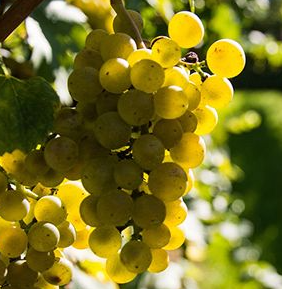
Catalanesca grows on the slopes of Vesuvius and spent most of its life classified as a table grape, despite nearly every ampelographer who described it insisting it could make good wine. Italy only recognised it as a wine variety in 2006. It is still listed in the National Registry as both, which is a fair summary of a grape nobody has quite made up their mind about.
Origins and history The name points to Spain, and it is also called Catalana or Uva Catalana. Local tradition holds that it arrived in Campania in the mid-1400s with Alfonso I of Aragon, king of the Kingdom of the Two Sicilies, and was planted on the slopes of Monte Somma between 150 and 500 metres. It took to the volcanic soils immediately and spread across the whole volcano.
What it used to be Catalanesca was well known around Naples by the fifteenth century and mattered greatly to the Vesuvian economy until the 1950s, when it was the principal grape of Lacryma Christi Bianco. It later lost that role to Caprettone. Because phylloxera never established itself in volcanic soil and most of the surviving vineyards are old, the majority of Catalanesca vines still stand on their own roots.
An unsettled identity A Catalanesca Nera grows in the province of Caserta, and whether it is related at all is unclear. Research in 2005 suggested links to Casavecchia, Summariello and Barbera del Sannio. Gianniello, a local variety once blended with Catalanesca for Vesuvian whites, is now considered a Catalanesca biotype. More awkwardly, material studied at Turin in 2008 differed genetically from material studied at Naples in 2005, which raises the question whether both were really Catalanesca to begin with.
In the vineyard The cluster is very sparse and the berries thick-skinned, so the fruit tolerates hanging late for surmaturité and keeps well after picking, which is exactly why it made such a good table grape. It ripens late, typically at the end of October, and needs plenty of sun, so exposure matters. It is rustic and productive but exquisitely sensitive to oidium, which demands attention through warm summers.
Two slopes, two wines Vesuvius offers two distinct terroirs. The south-western slope facing the sea, around Boscotrecase and Terzigno, has younger, more fertile soil richer in sand and minerals; grapes there are picked earlier and the wines show lower acidity. The northern slope of Monte Somma, around Sant’Anastasia and Somma Vesuviana, carries more clay, and the wines have greater structure and higher acidity. D’Agata considers the northern slope the better source.
Aromatic profile The wines begin soft and fruity, with pineapple, apricot and apple, and develop an obvious mineral character with a little bottle age. Whether the grape is aromatic at all is disputed: Antonio Mastroberardino calls it too weird and aromatic, D’Agata considers it essentially neutral, allowing that an aromatic biotype or a musqué clone may exist, or that the aromatic version may be a different variety altogether.
In the cellar Because the variety reads as neutral, extracting aromatic potential from the skin matters, and some producers cryomacerate a portion of the fruit rather than all of it, since over-extraction pulls potassium, precipitates tartrates, raises pH and softens the wine. Luigi Moio’s team at Naples found high total acidity, which should make Catalanesca less prone to oxidation than other Campanian whites. The main wine is the IGT Catalanesca del Monte Somma, and a passito version is permitted, as was once common locally.
Key expressions
- Catalanesca del Monte Somma IGT, the variety’s own designation.
- Northern-slope wines from Sant’Anastasia and Somma Vesuviana, with more structure and acidity.
- Passito versions, reviving an old Vesuvian practice.
- Wines from ungrafted old vines on volcanic soil.
The question of aging Moio expects well-made Catalanesca to hold at least four or five years after the vintage on the strength of its acidity, and the mineral character that emerges with bottle age supports that. This is unusual for a Campanian white and is the strongest argument for taking the variety seriously. As Benny Sorrentino points out, the revival is recent enough that nobody yet knows what it would do on different soils.
At the table Its texture and acidity suit the cooking of the bay, from fried seafood and anchovies to pasta with vegetables and the local tomatoes grown on the same volcanic soil. It has enough grip for white meat. Serve it around ten degrees, a little warmer for older bottles.
Why it matters Catalanesca is a grape recovered from the fruit bowl, recognised as a wine variety only in 2006 after centuries of ampelographers insisting it deserved to be. It carries the added interest of ungrafted old vines on a volcano and a genuine unresolved question about its own identity. Very little about it is settled, which is most of the appeal.