
Cesanese
Lazio's flagship red—earthy, spicy, and distinctly Roman, producing wines of genuine character around Olevano Romano and Affile.
Cesanese is a grape variety most associated in Italy with Cesanese del Piglio and Lazio.
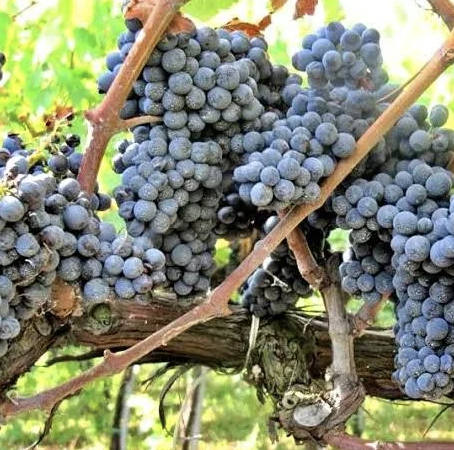
The Red of Rome Cesanese is the leading native red grape of Lazio, the region around Rome, and the source of its only red wines of real distinction. Long overshadowed by the area’s whites and by Italy’s more famous reds, Cesanese has enjoyed a quiet revival, producing fragrant, spicy, characterful wines that express the volcanic hills south-east of the capital. It is the proud red of a region better known for ancient ruins than fine wine.
Origins and History Cesanese has been grown in the hills of Lazio for centuries and exists in two forms — the more prized Cesanese d’Affile, with smaller berries, and the more productive Cesanese Comune. Worth a degree of scepticism here: d’Affile prefers very high altitudes and struggles to ripen, while Comune is far easier to grow, yet almost every producer claims to be working with d’Affile. A walk through the vineyards tells a different story, and the much smaller berries of the true d’Affile are what give it away. Native to the area around the towns of Affile, Olevano Romano and Piglio, it is a grape deeply rooted in the rural traditions of the Roman countryside, with a history stretching back to antiquity.
A Grape of the Roman Hills Cesanese’s heartland lies in the volcanic and limestone hills south-east of Rome, in denominations such as Cesanese del Piglio, Cesanese di Olevano Romano and Cesanese di Affile. The combination of volcanic soils, altitude and a warm but hill-tempered climate gives the wines their fragrance, spice and a distinctive savoury, mineral character.
In the Vineyard A late-ripening variety that can be tricky to ripen fully and evenly, Cesanese demands good sites and careful farming to avoid greenness and achieve its characteristic ripe, spicy fruit. The smaller-berried Cesanese d’Affile is the more highly regarded for quality, and restrained yields on the volcanic hillsides give the most concentrated and perfumed wines.
Appearance and Structure Cesanese gives medium to deep ruby wines of medium body, with moderate, fine tannins and fresh acidity. The wines are aromatic and fragrant rather than powerful, combining ripe red fruit with a savoury, spicy character and enough structure to age, in their finest examples, for a number of years.
Aromatic Profile The signature is red and dark fruit — cherry, raspberry and plum — lifted by floral notes, black pepper, dried herbs, liquorice and a warm, spicy, sometimes balsamic character. The aromas are perfumed and inviting, the spice and florality giving the wines a distinctive, almost exotic appeal beyond their red fruit.
In the Cellar Cesanese is made in a range of styles, from fresh, fragrant, lightly oaked wines for early drinking to more structured, barrique-aged bottlings built for ageing. The modern revival has seen ambitious producers focus on full ripeness, careful extraction and judicious oak to reveal the grape’s perfume and spice without sacrificing freshness.
Key Expressions
- Cesanese del Piglio (DOCG): the benchmark — fragrant, spicy, characterful reds from volcanic hills.
- Cesanese di Olevano Romano: perfumed, savoury reds from south-east of Rome.
- Cesanese di Affile: the small-berried, highly regarded form of the grape.
- Modern artisan bottlings: ambitious, age-worthy expressions driving the grape’s revival.
The Question of Aging Much Cesanese is made for fragrant, early drinking, but the best structured and oak-aged examples age well for several years, the spicy red fruit deepening into dried fruit, leather, tobacco and a savoury, balsamic complexity that rewards a little patience.
At the Table Its perfume, moderate tannin and spice make Cesanese a versatile partner for Roman and central Italian cooking: roast and grilled meats, lamb, rich pasta such as amatriciana and cacio e pepe, cured meats and medium cheeses. The spicy, savoury character flatters the bold flavours of the Roman table.
Why It Matters Cesanese is the proud native red of Lazio — a fragrant, spicy, characterful grape that has emerged from obscurity to give the region around Rome a serious red wine of its own, and a fine example of Italy’s ongoing rediscovery of its forgotten local varieties.