
Greco Bianco
Grown in Calabria and distinct from the better-known Campanian Greco, this ancient variety produces wines of local character around Bianco and Cirò.
Greco Bianco is a grape variety most associated in Italy with Cirò, Greco di Bianco and Basilicata.
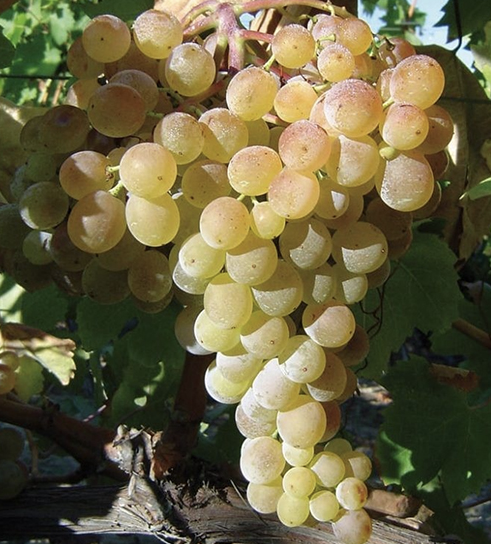
Greco Bianco is the grape behind one of Italy’s most ancient and celebrated dessert wines, a golden nectar produced on the sun-drenched Ionian coast of Calabria. With roots reaching back to the earliest Greek colonists, it carries millennia of history in every sweet, aromatic sip. For lovers of Italy’s great passito traditions, Greco Bianco and the legendary wine it makes are an essential taste of the deep south.
Which Greco Bianco The name covers several distinct Calabrian vines, so it pays to know which one is meant. Greco Bianco del Pollino is actually Montonico Bianco, a variety far more common in central Italy; Greco Bianco di Rogliano is Pecorello; and the vines called Greco Bianco di Lamezia Terme and di Donnici are Guardavalle. There is a second trap on the label: the celebrated air-dried sweet wine is Greco di Bianco, and DOC Greco Bianco Ciro, despite the near-identical name, is made only as a dry white.
Origins and history Greco Bianco is a white grape of Calabria whose history stretches back to the seventh century BC, when Greek settlers are said to have introduced it to the region’s Ionian shores. Its very name recalls that Greek heritage, and it should not be confused with the Greco of Campania, a distinct variety. Its most famous expression, the sweet passito of Bianco near Reggio Calabria, gained DOC recognition in 1980, cementing its status as one of Italy’s historic dessert wines.
An ancient sweet tradition The fame of Greco Bianco rests above all on Greco di Bianco, a luscious passito made in the town of Bianco and neighbouring Casignana. Here the grapes are partially dried on straw mats to concentrate their sugars before fermentation, a technique of great antiquity that yields a rich, high-alcohol sweet wine. This slow, sun-blessed method links the modern wine directly to the winemaking of the ancient Greek colonists.
Appearance and structure The passito is a beautiful yellow-amber in colour, deepening with age, with a rich, velvety texture on the palate. Despite its sweetness and its high alcohol, typically at least seventeen percent, the wine remains elegant and balanced rather than heavy. A refined acidity underpins the sweetness, giving the wine remarkable equilibrium and preventing it from becoming cloying.
Aromatic profile The nose is defined by a delicate zagara, or orange-blossom, aroma, joined by citrus fruits, honey and subtle herbal undertones. With age these deepen into candied peel, dried apricot and a warm, spiced complexity. The overall impression is one of aromatic elegance and Mediterranean warmth, a fragrant echo of the Calabrian sun and sea.
In the vineyard Greco Bianco grows on the warm, sun-baked hillsides of the Ionian coast, where the intense southern light and sea breezes ripen the fruit fully and build the high sugar levels needed for passito wine. Yields are naturally modest, and the grapes must reach full ripeness before being selected for drying. The demanding coastal terroir and traditional methods keep production small and artisanal.
In the cellar After harvest the grapes are laid out to dry on mats, concentrating their sugars and flavours over several weeks before a gentle pressing and fermentation. The resulting sweet wine is aged to develop its velvety texture and aromatic depth. This painstaking, traditional process, largely unchanged for centuries, is essential to the wine’s richness, balance and remarkable capacity to age.
Key expressions
- Greco di Bianco DOC, the classic Calabrian passito.
- Aged versions showing candied peel and spiced depth.
- Youthful bottlings emphasising orange-blossom freshness.
- Rare dry still versions of the same grape.
The question of aging With its concentration, sweetness and balancing acidity, Greco di Bianco is a wine built to age gracefully over many years. The aromatic notes of orange blossom and citrus deepen over time into honeyed, candied and spiced complexity, while the velvety texture grows ever more refined. Its balance ensures it retains freshness and elegance even after long cellaring.
At the table Traditionally savoured on its own as a meditation wine, Greco di Bianco also pairs beautifully with pastries, structured desserts and almond-paste sweets. Its richness and aromatic depth make it a fine match for strong or spicy cheeses as well. Its balance of sweetness and acidity makes it a memorable close to a meal. Serve it at cool cellar temperature.
Why it matters Greco Bianco is a living link to the dawn of Italian winemaking, the grape behind an ancient passito that the Greek colonists would recognise. Its elegant, aromatic sweetness and remarkable longevity make Greco di Bianco one of the country’s great dessert wines and a proud emblem of Calabria. For anyone drawn to history and sweetness in the glass, it is an unforgettable discovery.