
Petite Arvine
A Swiss-origin variety thriving in the Aosta Valley—aromatic and fresh with a distinctive saline, citrus-rind finish of remarkable character.
Petite Arvine is a grape variety most associated in Italy with Valle d'Aosta.
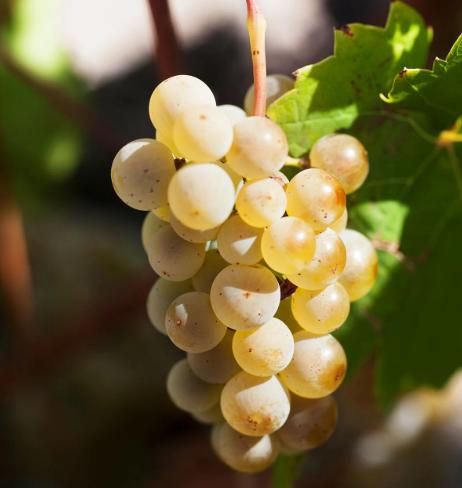
Petite Arvine is the aristocrat of Alpine whites, a variety that carries the thin, luminous air of the high valleys in every glass. Grown on the terraced slopes where Italy meets Switzerland, it produces wines of piercing clarity, mountain freshness and an unmistakable saline snap on the finish. For drinkers who think white wine cannot be both delicate and profound, Petite Arvine is a quiet, insistent rebuttal.
Origins and history Petite Arvine is a native of the Valais in Switzerland, where documentary references reach back to the early nineteenth century and almost certainly beyond. From the Swiss Rhône valley it slipped across the Alpine watershed into the Valle d’Aosta, Italy’s smallest and highest wine region, where it found a second home on the sun-trapping terraces above the valley floor. The two regions now share the grape as a common Alpine treasure, each interpreting it with its own accent.
An Alpine identity Everything about Petite Arvine speaks of altitude and rock. It ripens late, clinging to its acidity even as the mountain sun concentrates its sugars, and it draws a distinctive mineral tension from the schist and moraine soils of its home. Because plantings are small and painstakingly hand-tended on steep ground, the wine has always been a connoisseur’s pleasure rather than a supermarket staple, prized by those who seek out Europe’s overlooked mountain grapes.
Appearance and structure In the glass the wine is pale straw, often with faint green glints that hint at its freshness. The body is medium and taut rather than broad, built around a spine of bright, mouth-watering acidity. What lingers longest is the saline, almost briny quality on the close, a savoury edge that makes the wine feel more like spring water over stone than orchard fruit.
Aromatic profile Petite Arvine is gently aromatic, offering white flowers, grapefruit and citrus zest alongside notes of rhubarb, green apple and wild herbs. With a little bottle age these lift into honey, candied peel and a stony, flinty undertone. The overall impression is cool and precise, aromas that seem to have been washed clean by mountain streams.
In the vineyard This is a demanding grape to grow, best suited to steep, well-drained slopes with abundant sunshine to counter its late ripening. Yields must be kept modest to achieve full flavour, and the vertiginous terraces of the Valle d’Aosta allow no mechanisation, so every task is done by hand. The reward for this labour is fruit of remarkable purity and balance.
In the cellar Most producers favour a reductive, protective approach in stainless steel, preserving the grape’s crystalline aromatics and saline drive. A minority experiment with a portion of oak or extended lees contact to add breadth and a creamier texture. In the Valais, riper fruit is sometimes dried on the vine to make lusciously sweet flétri wines, proof of the grape’s dual personality.
Key expressions
- Bone-dry Valle d’Aosta bottlings of racy freshness and saline cut.
- Swiss Valais versions, often rounder and more richly fruited.
- Lees-aged and lightly oaked cuvées with added texture and depth.
- Rare sweet flétri wines from late-picked, partly dried grapes.
The question of aging Petite Arvine drinks beautifully in its taut, citrussy youth, but the best examples reward patience. Over five to ten years the acidity mellows and the wine develops honeyed, waxy and mineral complexity while keeping its savoury backbone. Its natural freshness acts as a preservative, allowing it to evolve gracefully rather than fade.
At the table The wine’s acidity and saline finish make it a natural partner for Alpine cuisine, from mountain cheeses and fondue to river trout and cured meats. It flatters delicate seafood, works wonders with vegetable risotto, and cuts cleanly through buttery or creamy dishes. Serve it well chilled to let its mineral tension sing.
Why it matters Petite Arvine proves that great white wine can come from the most marginal, high-altitude corners of the wine world. It is a grape that rewards the grower’s toil and the drinker’s curiosity in equal measure, a benchmark for Alpine viticulture and a reminder that Italy’s smallest region punches far above its weight. For anyone exploring the whites of the mountains, it is an essential and unforgettable discovery.