

Featured In: Green Flags & Great Wine and Why I Chose Ischia
It has been an exciting start to 2026. My recent insights on Italian wine and buying philosophy were just featured
Featured In: Green Flags & Great Wine and Why I Chose Ischia Read Post »
The White Island—volcanic, sea-swept wines from the Bay of Naples, defined by distinct salinity and Mediterranean herbs.

Zones: regional wine-zone data of Piemonte, Toscana, Veneto, Lombardia, Lazio and Bolzano (CC BY / CC0), EU wine PDO boundaries (Candiago et al. 2022, CC0), production rules drawn with ISTAT boundaries; vineyards: Regione Piemonte (CC BY 4.0), Regione Toscana land use 2019 (CC BY 4.0); geology: Regione Toscana DataBase Geologico (CC BY 4.0), Arpa Piemonte - Geoportale / CNR-IGG GeoPiemonte Map 1:250,000 (CC BY 4.0); places: GeoNames (CC BY 4.0), OpenStreetMap (ODbL). Imagery: Powered by Esri — Esri, Maxar, Earthstar Geographics. Terrain: © Mapterhorn.
Official zone boundary · Italian wine map · Regional map (Federdoc) · Imagery: Powered by Esri
Viticulture on this island dates back to the Euboean Greeks (770 B.C.), making it one of Italy’s oldest wine cultures. The DOC is defined by two native whites: Biancolella and Forastera.
The Terroir This is a volcanic rock jutting out of the sea. The green Tufa soils are rich in sulfur and potassium. Viticulture here is extreme, particularly in the Frassitelli cru, where terraces hang precariously over the sea. The southern side of the island produces softer, fruitier wines, while the northern slopes yield wines of piercing minerality.
Grape Varieties The DOC rests on a small cast, most of it found nowhere else in quantity:
Heroic Viticulture The vineyards here are parracine — terraces held by dry-stone walls built from the island’s own volcanic rock, reached on foot and worked entirely by hand. At Frassitelli, on the northern flank of Monte Epomeo, fruit is moved by a small monorail because there is no other way down. Tourism has claimed most of the flat land and much of the coast, so what survives under vine is largely what could never be built on — which is also where the best wine comes from.
The Critical Take As noted by Ian D’Agata, Biancolella from Ischia can age remarkably well, developing Riesling-like petrol notes after decades. It is a serious white wine disguised as a holiday drinker.
At the Table Island cooking, unsurprisingly: coniglio all’ischitana, the rabbit braised with tomato and herbs that is the local dish, alongside grilled fish, seafood pasta, and the tomatoes and capers grown on the same volcanic soil. Biancolella at 11–12°C; Piedirosso lightly chilled at 14–15°C, which is how it is drunk there and how it makes most sense. Very little of the island’s production ever reaches the mainland, and almost none of it leaves Italy, so most of what is made is drunk within sight of where it grew — which is charming for the visitor and frustrating for everyone else.
Benchmark Producers D’Ambra (the historic guardian of the island), Cenatiempo, Pietra di Tommasone.
It has been an exciting start to 2026. My recent insights on Italian wine and buying philosophy were just featured
Featured In: Green Flags & Great Wine and Why I Chose Ischia Read Post »
Falanghina is the great workhorse of Campania, but on Ischia, it transforms into something wilder and more distinct. Grown on
If Ischia has a “Grand Cru,” this is it. Frassitelli is a single, four-hectare vineyard perched a breathtaking 600 meters
2024 Casa d’Ambra “Frassitelli” Ischia Biancolella Read Post »
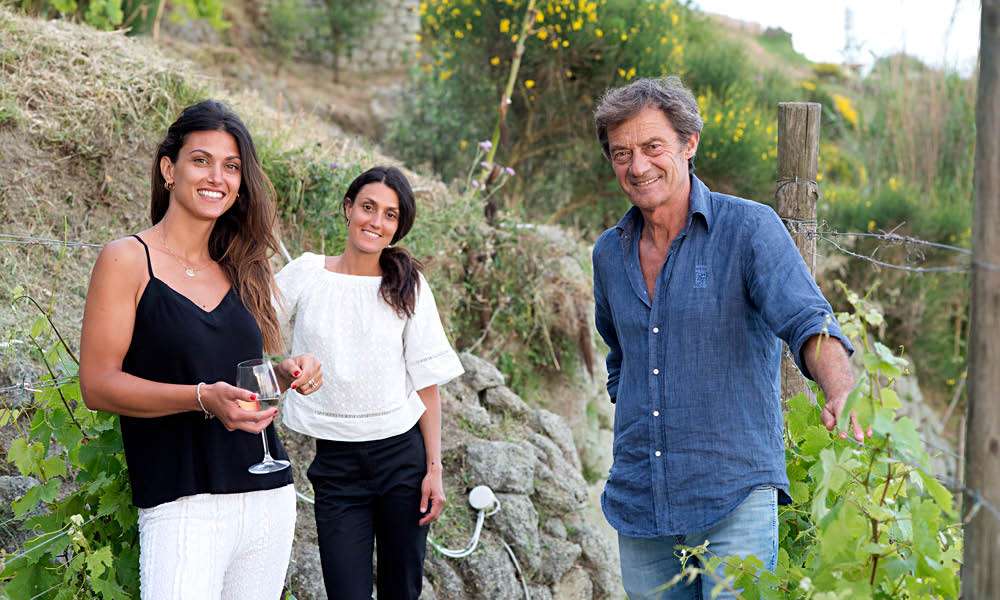
To approach Ischia by sea is to witness a paradox: a lush, verdant island that rises violently from the Bay
Casa d’Ambra: The Heroic Wines of the Green Island Read Post »