
Piedirosso
Campania's 'red foot' grape—fresh, cherry-bright, and volcanic, an essential component of Lacryma Christi and increasingly celebrated as a varietal.
Piedirosso is a grape variety most associated in Italy with Taurasi, Campi Flegrei, Costa d'Amalfi and Ischia. I have reviewed five wines made from it.
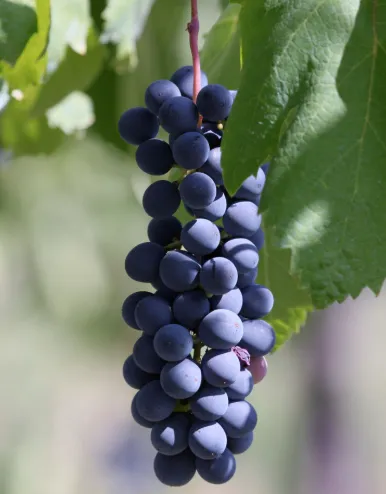
Campania’s Soft Volcanic Red Piedirosso is one of the most important native red grapes of Campania, the soft, fruity counterpart to the region’s mighty Aglianico. Grown on the volcanic soils around Naples, Vesuvius and the Campi Flegrei, it produces fresh, gently structured, characterful reds, both on its own and as a softening partner in blends. It is a grape of the Neapolitan coast, woven into the volcanic landscapes and ancient wine culture of the region.
Origins and Name Piedirosso is an ancient Campanian variety, very likely among the grapes grown in the region in classical times. Campania is full of Piedirossos, and most are simply place names for the same vine: Piedirosso Beneventano and Piedirosso Napoletano are identical to one another and to standard Piedirosso. The exception is Piedirosso Avellinese, grown in the province of Avellino, which differs in both leaf and cluster shape and is a distinct variety, closely related to the rare and no longer cultivated Uva Strone. Its name — “red foot” — and its local Neapolitan name per’ e palummo (“dove’s foot”) both refer to the red, claw-like colour of the grape’s stalks at ripeness, which resemble the red foot of a pigeon or dove. It is a grape deeply rooted in Neapolitan tradition.
A Grape of Volcanic Campania Piedirosso’s heartland is the volcanic terroir around Naples: the slopes of Vesuvius, the Campi Flegrei to the west, and the island of Ischia, as well as the wider Campanian hills. The volcanic, often sandy soils — some of them ungrafted, having escaped phylloxera — and the warm coastal climate give the grape its fresh, fruity, mineral character.
In the Vineyard A late-ripening variety that can be tricky to ripen fully and is sensitive to its site, Piedirosso demands warmth and good exposure to develop its soft, fresh fruit without greenness. On the volcanic soils of its Campanian heartland, sometimes from old ungrafted vines, it gives wines of charming fruit and a distinctive mineral, volcanic lift.
Appearance and Structure Piedirosso gives medium-coloured, medium-bodied wines with soft, gentle tannins and fresh acidity. It is a grape of fruit, freshness and approachability rather than power or structure, which is why it is so often blended with the firm, tannic Aglianico, softening and fleshing it out, while on its own it makes fresh, food-friendly, characterful reds.
Aromatic Profile The signature is fresh red fruit — red cherry and plum — lifted by floral notes, dried herbs, a hint of spice and a distinctive mineral, sometimes smoky volcanic character. The aromas are fresh and inviting, the volcanic minerality giving the wines a savoury edge that lifts their soft, juicy fruit and marks them as products of their dramatic terroir.
In the Cellar Piedirosso is made both as a soft, fresh, fruit-driven varietal red and as a blending partner that softens the structured Aglianico in wines such as those of Vesuvio and the Campi Flegrei. It is usually vinified to preserve its fresh fruit and volcanic character, with restrained oak, and is also made in a charming rosato.
Key Expressions
- Campi Flegrei Piedirosso: the benchmark — fresh, mineral, volcanic reds, sometimes from ungrafted vines.
- Vesuvio (Lacryma Christi del Vesuvio Rosso): a key grape in the famous reds of Vesuvius.
- Ischia & coastal Campania: fresh, characterful island and coastal reds.
- Blends with Aglianico: a softening, fruity partner to the region’s noble red.
The Question of Aging Most Piedirosso is made for fresh, fruity, relatively early drinking, prized for the soft fruit and volcanic freshness at their best in youth. Some structured examples can hold for a few years, but the grape’s appeal lies chiefly in its fresh, juicy, mineral character rather than long cellaring.
At the Table Its soft tannins, fresh acidity and juicy fruit make Piedirosso a versatile, food-friendly red, well suited to Neapolitan and coastal cooking: pizza, tomato-based pasta, grilled fish and meats, vegetable dishes and fresh cheeses such as mozzarella. Served slightly cool, the fresher styles are especially appealing.
Why It Matters Piedirosso is the soft, volcanic heart of Campanian red wine — the fresh, fruity counterpart to noble Aglianico, deeply rooted in the volcanic landscapes around Naples, and a charming, characterful expression of one of Italy’s most ancient and dramatic wine regions.