
Albana
Romagna's ancient white, capable of ranging from bone-dry to lusciously sweet as a Passito—and the first Italian white grape to earn DOCG status.
Albana is a grape variety most associated in Italy with Romagna Albana. I have reviewed one wine made from it.
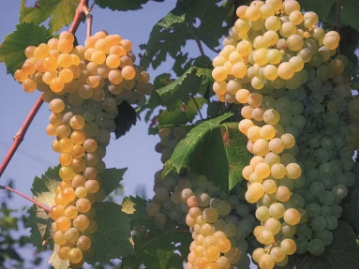
Romagna’s Historic White Albana is the signature white grape of Romagna, in eastern Emilia-Romagna, and a variety of great historical importance: Albana di Romagna was the first Italian white wine to be granted DOCG status. Grown in the hills south of the Via Emilia, it produces a wide range of styles, from crisp dry whites to structured, skin-contact wines and luscious sweet passito, all marked by the grape’s firm structure.
An Ancient Variety Albana is one of Italy’s oldest cultivated grapes, with roots in Romagna stretching back to Roman times, and its name is often linked to the Latin for “white” or to the Alban hills near Rome. Long central to the wine culture of Romagna, it carries a heritage few Italian whites can match, its deep history part of the reason for its landmark elevation to DOCG.
A Landmark DOCG In 1987 Albana di Romagna became the first Italian white to earn DOCG status, a milestone that recognised the region’s most important white grape, even if the decision was seen by some as political. The classification covers dry, off-dry, sweet and passito styles, reflecting the grape’s versatility, and it cemented Albana’s place as the flagship white of Romagna’s hills.
In the Vineyard Albana is a vigorous variety that ripens well in Romagna’s warm climate, developing thick, golden skins rich in phenolics — a key to both its structure and its suitability for skin-contact and sweet wines. Grown on the clay and limestone hills of the region, it gives concentrated, characterful fruit, with careful yield management important to achieving balance and quality.
Appearance and Structure Albana gives medium-bodied whites of notable structure, often deeper gold than most, with firm acidity, moderate phenolic grip from its thick skins and, in some styles, gentle tannin from skin contact. This structural backbone sets it apart from lighter Italian whites, giving the wines presence and texture, whether in a crisp dry version, an amber skin-fermented wine, or a rich passito.
Aromatic Profile The aromas run to ripe orchard fruit, citrus, white flowers and a characteristic note of chamomile and honey, with herbal and lightly spiced undertones. Skin-contact versions add dried fruit, tea and savoury depth, while the passito is intensely honeyed and apricot-scented. Across styles, Albana combines floral, fruity and honeyed character with a distinctly savoury, structured personality.
In the Cellar Albana’s versatility shows in the cellar: it is made as a fresh stainless-steel dry white, as a structured skin-contact or “amber” wine that harnesses its phenolic-rich skins, and as a luscious passito from dried grapes. Its thick skins and firm acidity give winemakers unusual scope, allowing everything from crisp modern styles to traditional, textured and sweet expressions.
Key Expressions
- Romagna Albana Secco DOCG: the structured dry white, Italy’s first white DOCG.
- Passito: the luscious, honeyed dried-grape sweet wine.
- Skin-contact / amber: textured wines exploiting the grape’s thick skins.
- Off-dry styles: gently sweet versions balancing fruit and acidity.
The Question of Aging Thanks to its structure, phenolic grip and firm acidity, Albana ages better than most Italian whites. The dry and skin-contact wines can develop for several years, gaining honeyed, nutty and savoury complexity, while the passito, with its concentration and sugar, ages for a decade or more, deepening into rich notes of dried apricot, caramel and spice while keeping its balancing acidity.
At the Table Albana’s structure and versatility make it a fine food wine: the dry styles suit antipasti, poultry, richer fish and the cuisine of Romagna, while the skin-contact wines stand up to more robust, savoury dishes. The passito is a classic partner for almond pastries, dried fruit, hard and blue cheeses, its honeyed richness and acidity balancing both sweet and savoury flavours.
Why It Matters Albana is the proud, historic white of Romagna and a landmark in Italian wine as the first white DOCG. Its structure, thick skins and versatility across dry, amber and sweet styles set it apart from the country’s lighter whites, making it both a link to an ancient regional tradition and a grape newly relevant in an age of textured, characterful whites.