
Ansonica
The Tuscan coastal name for Inzolia, grown on Elba and the Argentario.
Ansonica is a grape variety most associated in Italy with Ansonica Costa dell’Argentario, Bianco di Pitigliano, Bivongi and Elba.
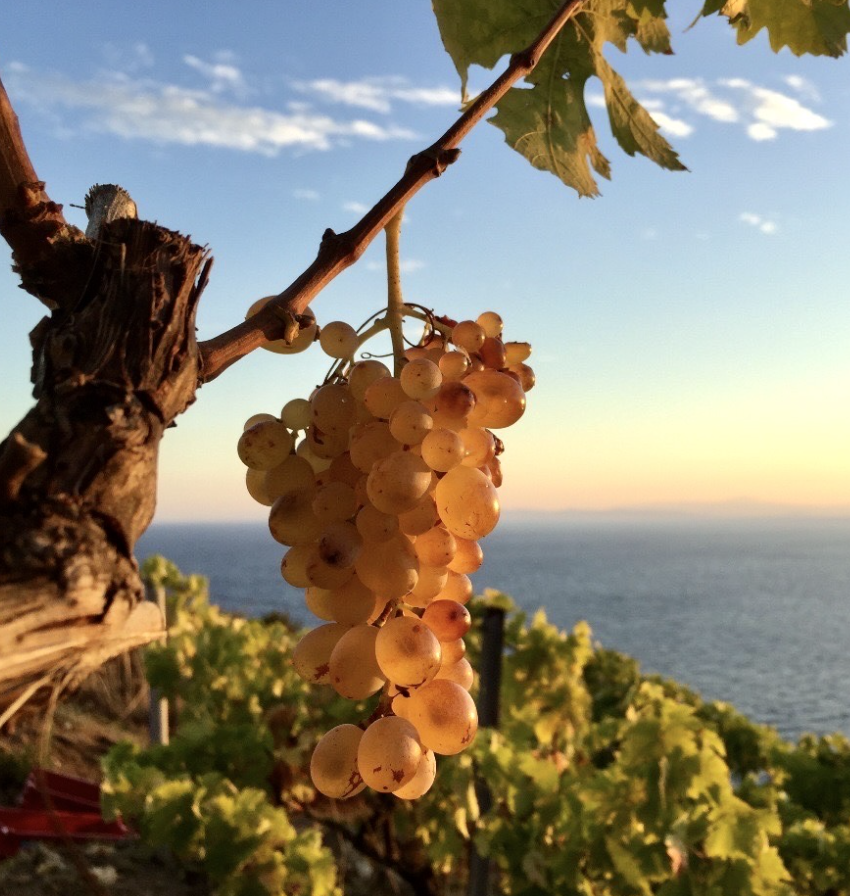
Ansonica and Inzolia are the same grape. The full guide lives on the Inzolia page, which is the name the wines are usually sold under.
Which name is correct Strictly, this one. Ansonica is the official name in the National Registry, and Ian D’Agata is blunt that Inzolia, though universal in Sicily, is not the variety’s proper name and should not be used. The name is thought to derive from the French sorie, meaning dark or gold, because the berries turn golden when very ripe. Commerce has not been persuaded: the labels still overwhelmingly say Inzolia.
Why the two names are worth keeping apart. They map onto two genuinely different wines. In Sicily, as Inzolia, the variety gives lighter, more citrusy whites, and the warm climate is arguably the wrong home for a grape this low in acid. In Tuscany, as Ansonica, and on Giglio where it is written Ansonico and pronounced ansonaco, it takes to the acid granite-derived soils of the islands and gives something more concentrated, saline and alcoholic, with real extract.
A naturally tannic white Whatever the name, this is the rare white grape with genuine tannin, and low natural acidity that falls away fast as the fruit ripens. That combination is why it was historically picked late and folded into Marsala, where oxidative handling suited it, and why Elba Ansonica and the wines of Giglio are so unlike the Sicilian versions.
For origins, ampelography, viticulture and the wines in full, see Inzolia.