
Fortana
The sand-dune red of the Ferrara coast, grown ungrafted on soils phylloxera cannot cross.
Fortana is a grape variety most associated in Italy with Bosco Eliceo, Lambrusco Salamino di Santa Croce, Forlì and Fortana del Taro.
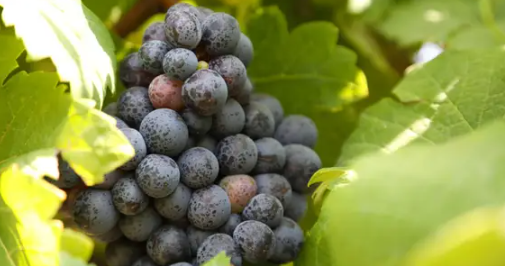
Fortana is the red grape of the sands, grown on the salt-laden dunes where the Po reaches the Adriatic and made into a lightly sparkling wine that has been served on the tables of Emilia-Romagna for centuries. It went out of fashion in the 1980s as Chardonnay and Cabernet swept through Italy, and it has come back for exactly the reasons it was abandoned: it is local, it is distinctive, and it tastes of where it is from.
Origins and history Until the twentieth century Fortana was known as Uva d’Oro, the golden grape, and also as Fruttana, meaning plentiful or very fruity. Both names point at its generous yields, something farmers living off what their fields produced valued highly. A competing theory reads Uva d’Oro as a reference to Burgundy’s Côte d’Or, though no hard evidence supports it. Agostino Gallo documented the grape in Emilia-Romagna in the sixteenth century, and some hold that the Benedictine monks of the abbey of Pomposa were growing it as early as the eleventh.
A variable family Fortana shows very high intravarietal variability, with numerous biotypes that look markedly different from one another. The most important is Fortanina, or Fortanella, which has smaller berries and much darker, more polyphenol-rich skins. Genetic work has suggested a parent-offspring relationship with Lambrusco Maestri, which fits the grape’s rustic, almost wild behaviour in the vineyard. A long-held equation with Canina Nera is probably wrong: the berries differ, Fortana’s round and Canina Nera’s almost oval, and Romagna’s leading ampelographer rejects it.
In the vineyard Large bunches and large berries, high vigour and reliable production make Fortana an easy grape to grow, with good disease resistance to match. It behaves much as wild vines do, which is part of why it survived neglect so well. Harvest falls in the first two weeks of October, and two clones, CAB 1 and CAB 13, are available. Brugnola, once thought a Fortana biotype, is now known to be a distinct variety closely related to Nebbiolo.
The wines of the sands The variety’s heartland is the Bosco Eliceo near Ferrara, named for the holm oaks that once covered it and the only DOC permitting up to 100 per cent Fortana. It is a genuinely unusual habitat: close to the sea, with salt-rich, extremely sandy soils, sea breezes, persistent fog and high humidity. Because phylloxera cannot survive in that sand, most of the vines are ungrafted, and the wines are known in Italy as vini delle sabbie, wines of the sands.
Appearance and structure Fortana gives a vivid red of moderate weight, firm acidity and a light, grippy tannin that suits its usual lightly sparkling form. It is a wine built for refreshment rather than contemplation, and the frizzante versions carry a slight bitterness on the finish that makes them unusually good with food. The Fortanella biotype yields something darker and more concentrated.
Aromatic profile Bright red cherry and raspberry lead, complicated by cocoa, black pepper, quinine and liquorice, an unusual and recognisable combination. The sparkling versions turn more overtly floral and fragrant. Rosato styles emphasise the red fruit and lose the bitter edge.
In the cellar Fortana is made dry or sweet, still, frizzante or fully sparkling, with the dry frizzante the most typical and the most convincing. The IGT Fortana del Taro is another good source, more often than not made from Fortanella. Winemaking is deliberately unfussy, since the appeal of the wine lies in its directness.
Key expressions
- Bosco Eliceo DOC, the one appellation built around the grape, often from ungrafted sand-grown vines.
- Dry frizzante reds, the traditional and most typical style.
- IGT Fortana del Taro, frequently made from the darker Fortanella.
- Rosato and sweet versions from the same coastal strip.
The question of aging This is not a wine for the cellar and does not pretend to be. Fortana is at its best within a year or two of the vintage, while the fruit is vivid and the bubble still lively, and the sandy-soil wines in particular lose their nerve with time. The rare Fortanella bottlings carry more structure and will hold three or four years, but the point of the grape is freshness.
At the table Fortana was made for the cooking of Emilia-Romagna and behaves accordingly: chilled slightly, its acidity and faint bitterness cut through salumi, grilled eel from the Comacchio lagoon, fried fish and anything involving pork fat. It is one of the few reds that genuinely works with the local seafood. Serve it at twelve to fourteen degrees.
Why it matters Fortana is a survivor of a habitat that should not really grow wine at all, and the ungrafted vines of the Bosco Eliceo are among the very few in Italy that never had to confront phylloxera. It is unfashionable, inexpensive and completely specific to its stretch of Adriatic coast, which is precisely the argument for it. Wines like this are the reason Italy’s native varieties are worth defending.