
Gamay
The Beaujolais grape finds a modest but interesting foothold in Italy, particularly in the Aosta Valley where it blends with local varieties.
Gamay is a grape variety most associated in Italy with Valle d'Aosta.
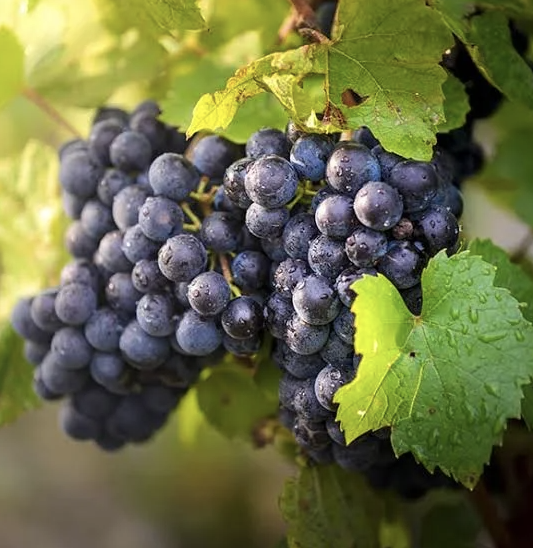
Gamay is the great grape of joyful, thirst-quenching red wine, a variety that has built its reputation on charm, freshness and sheer drinkability. Famous the world over as the soul of Beaujolais, it also has a quiet Italian presence in the Alpine vineyards of the north-west. Light in body but generous in fruit, Gamay is proof that a red wine need not be heavy or serious to be genuinely delightful.
Origins and history Gamay is an ancient French variety, the natural offspring of Pinot Noir and the old white grape Gouais Blanc, a parentage it shares with many classic vines. It rose to prominence in Burgundy before being famously banished from the Côte d’Or in the late fourteenth century, when the Duke of Burgundy declared it inferior to Pinot Noir. Exiled south, it found its true home in the granite hills of Beaujolais.
Gamay in Italy In Italy Gamay is grown chiefly in the Valle d’Aosta, where genuine Gamay Noir produces bright, high-altitude reds of Alpine freshness. It is worth noting that the grape historically called Gamay in Umbria’s Trasimeno area is in fact Grenache, a longstanding case of mistaken identity, so the true Gamay of Italy remains a mountain speciality. This makes authentic Italian Gamay a niche pleasure, prized by those exploring the country’s Alpine fringes.
Appearance and structure Gamay gives wines of pale to medium ruby, typically light in body with modest tannins and lively, refreshing acidity. The texture is soft and juicy, built for gulping rather than sipping in reverence. Its lightness is its virtue, offering a red wine that feels bright and energetic rather than weighty or demanding.
Aromatic profile The grape bursts with vivid red fruit, strawberry, raspberry, red cherry and cranberry, often lifted by floral and peppery notes. When made by carbonic maceration it takes on the exuberant banana, bubblegum and candied aromas that define young Beaujolais. In its more serious Alpine and cru forms it shows greater depth, with earthy, mineral and spicy undertones.
In the vineyard Gamay is an early-budding, early-ripening variety that thrives on granite and schist soils, drawing tension and perfume from poor, well-drained ground. It is naturally productive, so quality-focused growers keep yields in check to concentrate its bright fruit. In the Valle d’Aosta its early ripening is an asset, allowing it to reach maturity in a short, cool mountain growing season.
In the cellar Gamay is often vinified using carbonic or semi-carbonic maceration, a technique that emphasises fruit and freshness while minimising tannin. This produces the supple, aromatic style for which the grape is loved. More ambitious producers use traditional fermentation and modest oak ageing to craft structured wines with genuine depth and a longer life, revealing Gamay’s more serious side.
Key expressions
- Light, fruity Valle d’Aosta reds of Alpine freshness.
- Carbonic-macerated styles bursting with juicy red fruit.
- Structured, cru-style wines built on granite soils.
- Rosé and blended versions showcasing its bright character.
The question of aging Most Gamay is made to be enjoyed young, within a year or two of the vintage, when its vibrant fruit is at its most exuberant. Yet the finest examples, particularly those from old vines and structured fermentations, can age surprisingly well, developing earthy, savoury complexity over five to ten years. In these wines Gamay reveals a seriousness that its cheerful reputation tends to hide.
At the table Gamay’s low tannin and bright acidity make it one of the most food-friendly reds of all, happy alongside charcuterie, roast chicken, mushroom dishes and mountain cheeses. Served lightly chilled it becomes a refreshing partner for picnics, summer meals and lighter fare. Its versatility and lack of pretension make it a reliable everyday choice.
Why it matters Gamay champions the enduring value of lightness, freshness and pure drinking pleasure in a world often obsessed with power. Its Alpine Italian expressions add a distinctive high-altitude voice to the grape’s global story, while reminding us that great wine can be humble and joyful. For anyone who believes red wine should first and foremost be delicious, Gamay is a lasting favourite.