
Grasparossa
The most tannic of Modena's three Lambrusco varieties, the Grasparossa di Castelvetro DOC produces dark, spicy sparkling reds with firm, gripping structure.
Grasparossa is a grape variety most associated in Italy with Lambrusco Grasparossa di Castelvetro.
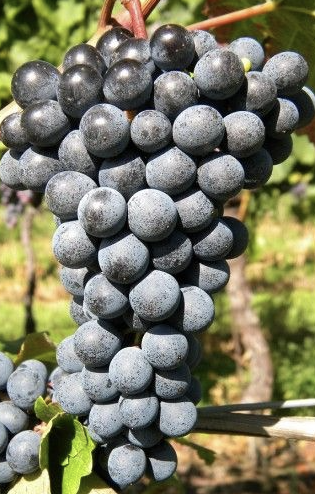
Lambrusco Grasparossa is the boldest and most structured member of the Lambrusco family, a sparkling red that defies every lazy stereotype about the style. Grown in the hills around Modena, it produces deeply coloured, tannic, full-bodied frizzante wines with genuine presence and grip. For anyone who thinks Lambrusco means only sweet and simple, Grasparossa is a robust and delicious corrective.
Origins and history Grasparossa is one of the many distinct varieties within the broad Lambrusco family, native to the province of Modena in Emilia-Romagna. Its name derives from the red stems, or graspi rossi, that its clusters develop as they ripen, a vivid visual signature in the vineyard. Its historic heartland is the town of Castelvetro, just south of Modena, which lends its name to the grape’s flagship appellation.
The bold Lambrusco Among the Lambruschi, Grasparossa stands apart for its power. It is the fullest-bodied, most tannic and most deeply coloured of the group, higher in structure than the paler, more delicate Sorbara or the balanced Salamino. This makes it the Lambrusco of choice for those seeking a sparkling red with real backbone, a wine that can stand up to the hearty, fatty cuisine of its Emilian home.
Appearance and structure Grasparossa pours a deep, dense purple-ruby, often crowned by a vivid violet foam when poured. It is full-bodied for a Lambrusco, with noticeable tannic grip and bright, refreshing acidity beneath its lively bubbles. Made in dry and off-dry styles, it offers a satisfying combination of structure, freshness and frothy exuberance that few other sparkling reds can match.
Aromatic profile The nose bursts with dark fruit, black cherry, plum and blackberry, lifted by floral notes of violet and a subtle earthiness. In drier versions a savoury, almost balsamic edge emerges, while off-dry styles emphasise the ripe, juicy fruit. The overall impression is generous and vinous, with more depth and darkness than the lighter members of the Lambrusco family.
In the vineyard Grasparossa is a late-ripening variety with thick skins, which account for its deep colour and firm tannins. It favours the clay and silt-rich soils of the Modenese hills, where moderate elevation preserves freshness and reinforces structure. Its robust nature and disease resistance make it a dependable grape, though careful ripening is needed to balance its tannin with sufficient fruit.
In the cellar The wine is made sparkling, most often by the Charmat tank method that captures its fresh fruit and frothy character in an approachable, everyday form. Fermentation can be stopped to leave a touch of sweetness or taken fully dry for a more structured, savoury wine. A minority of producers use the traditional bottle-fermented method to craft more complex, artisanal expressions.
Key expressions
- Dry Lambrusco Grasparossa di Castelvetro, structured and savoury.
- Off-dry amabile styles emphasising ripe dark fruit.
- Traditional bottle-fermented artisanal versions.
- Deeply coloured frizzante for the Emilian table.
The question of aging Like most Lambrusco, Grasparossa is made to be enjoyed young and fresh, when its fruit and effervescence are at their most vibrant. It is not a wine for long cellaring, and most bottles are best drunk within a couple of years of the vintage. Its tannin and structure, however, give it more staying power than lighter sparkling reds, allowing it to hold its character well.
At the table Grasparossa is the perfect foil for the rich, fatty cuisine of Emilia, from cured meats and salumi to cotechino, roast pork and aged Parmigiano. Its tannin, acidity and bubbles cut through fat and cleanse the palate like few other wines, making every bite taste fresh. Serve it lightly chilled to accentuate its refreshing, food-friendly nature.
Why it matters Grasparossa single-handedly rehabilitates the reputation of Lambrusco, showing that this maligned category can produce serious, structured and thrilling sparkling reds. It is the ideal partner for one of Italy’s greatest food cultures and a joyful reminder that great wine need not be still or solemn. For drinkers ready to rethink Lambrusco, Grasparossa is the place to start.