
Nascetta
A nearly-lost Piedmontese white rescued by dedicated Langhe producers, producing wines of remarkable richness, amber hue, and hazelnut-tinged complexity.
Nascetta is a grape variety most associated in Italy with Langhe.
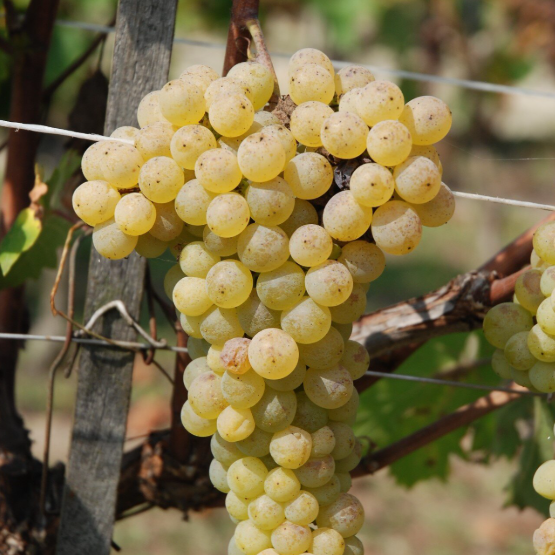
Nascetta is one of Piedmont’s most captivating success stories, a white grape rescued from the brink of extinction to become a cult favourite among lovers of Italian wine. Native to the Langhe hills more famous for Barolo, it offers a rare thing in this red-dominated heartland, a serious, age-worthy white with genuine local roots. Aromatic yet structured, it bridges the gap between perfume and power in a way few Italian whites can match.
Origins and history Nascetta is the only indigenous white grape of the Langhe, historically grown around the village of Novello in the shadow of the great Barolo crus. For much of the twentieth century it was all but abandoned, surviving in a handful of old vineyard rows as growers turned their attention to more profitable red varieties. It seemed destined to disappear entirely, another casualty of the rush toward international fashion.
A remarkable revival The turning point came in the early 1990s, when the grower Elvio Cogno and his son-in-law tasted an old bottle of Nascetta and were struck by its quality and staying power. Their first revival bottling followed in 1994, and the grape’s fortunes began to change. Nascetta was admitted to the Langhe DOC in 2002, and in 2010 it earned its own dedicated subzone for wines produced in the commune of Novello, a rare honour for a once-forgotten variety.
Appearance and structure In the glass Nascetta shows pale straw yellow with faint greenish reflections, deepening to gold with age. It is a semi-aromatic grape that combines fragrance with real body, firm acidity and a notable mineral backbone. There is a subtle waxy texture to the wine that gives it weight and grip, setting it apart from lighter, simpler whites.
Aromatic profile The nose is intense and layered, opening with floral notes of acacia and iris alongside apple, grapefruit and tropical fruit. Underneath run hints of honey, sage and rosemary that lend a savoury, herbal dimension. With bottle age Nascetta develops a distinctive petrol-like note reminiscent of fine Riesling, evidence of its complexity and evolution.
In the vineyard Nascetta thrives on the calcareous marls of the Langhe, the same soils that give Barolo its finesse, and it benefits from well-exposed hillside sites. It is not a high-yielding grape, and careful vineyard management is needed to balance its aromatic intensity with its structure. Its resurgence has encouraged growers to replant old parcels and treat it with the seriousness once reserved for their reds.
In the cellar Winemakers take two broad approaches. Many ferment and age Nascetta in stainless steel to preserve its bright fruit and floral lift, producing fresh, mineral wines for earlier drinking. Others, recognising its structure, turn to large oak casks or barriques that add spice, vanilla and further ageing potential, coaxing out a richer, more contemplative style.
Key expressions
- Steel-fermented Langhe Nascetta, fresh, floral and mineral.
- The dedicated Nas-cëtta bottlings from the commune of Novello.
- Oak-aged versions with added spice, texture and longevity.
- Small-production cuvées from the growers who led its revival.
The question of aging What convinced its rescuers of Nascetta’s worth was precisely its ability to age, and the best examples confirm it. Over five to ten years the wine trades youthful fruit for honeyed, waxy and petrol-tinged complexity while retaining its firm acidic frame. Few Italian whites outside the northern classics evolve with such grace, making Nascetta a genuine cellar candidate.
At the table Its combination of aromatics, body and acidity makes Nascetta a versatile partner at the table. It shines with the rich cuisine of Piedmont, from vitello tonnato and agnolotti to fonduta and white-meat dishes, and it stands up to herbs, garlic and gentle spice. Serve it not too cold so its perfume and texture can fully unfold.
Why it matters Nascetta is a triumph of viticultural memory, a grape saved by a handful of believers and restored to its rightful place among Italy’s fine whites. It gives the Langhe a white wine worthy of its legendary reds and offers drinkers a distinctive, ageworthy alternative to the international mainstream. For anyone charting the revival of Italy’s native varieties, Nascetta is an essential chapter.