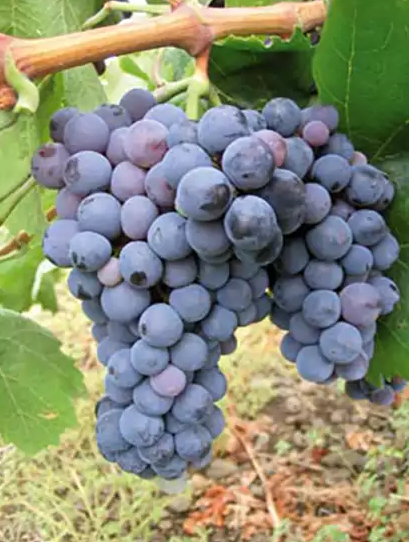
Nerello Cappuccio is a grape variety most associated in Italy with Etna, Faro and Calabria. I have reviewed seven wines made from it.
Etna’s Other Red Nerello Cappuccio is the supporting native red grape of Mount Etna, the traditional blending partner to the more celebrated Nerello Mascalese. Where Mascalese provides perfume, structure and the Burgundian elegance that has made Etna famous, Cappuccio contributes colour, softness and fleshy fruit. Long overlooked and even uprooted, it is increasingly studied and occasionally bottled alone as growers explore the full palette of Sicily’s great volcano.
A Sicilian Native Also known as Nerello Mantellato, the grape takes its name from the cape- or cloak-like canopy its vine forms, the Italian cappuccio meaning hood or cape. It is grown almost exclusively on Etna, on the same black volcanic soils and steep terraces as Nerello Mascalese, and shares the very late ripening that the volcano’s high-altitude but sun-drenched autumns allow.
A Grape of Some Mystery Nerello Cappuccio’s origins and relationships remain only partly understood, and it has historically been confused with other dark Sicilian grapes in the field. For generations it was simply interplanted with Mascalese in the old bush-vine vineyards of Etna, the two harvested and fermented together, so that its precise contribution was rarely isolated until the modern era of single-variety study.
Appearance and Structure Nerello Cappuccio gives deeper colour and softer, rounder tannins than the pale, structured Mascalese, with slightly lower acidity. On its own it is supple, fruity and approachable; in the blend it fleshes out and colours Mascalese’s more austere, ethereal frame, giving the finished wine balance, depth and immediate charm.
Aromatic Profile Expect ripe red and dark cherry, plum and red berries with notes of dried herbs, spice and the smoky, mineral, volcanic character that all Etna reds share. It is generally fruitier and more immediately generous than the perfumed, tar-and-rose Mascalese, lending warmth, colour and flesh to the cuvée.
The Art of the Blend Traditionally, Etna Rosso is a blend dominated by Nerello Mascalese with a smaller proportion of Nerello Cappuccio, the two grapes complementing each other — structure and perfume from one, colour and flesh from the other. This partnership, refined over generations on the volcano’s terraces, is central to the classic character of Etna’s red wines and its prized rosato.
A Modern Revival As Etna has become one of the world’s most fashionable terroirs, growers have begun to look more closely at Nerello Cappuccio in its own right. A small but growing number of varietal bottlings explore its softer, fruitier personality, while others champion its role in giving Etna Rosso colour and approachability — a quiet rehabilitation of a once-neglected grape.
In the Cellar Like its partner, Nerello Cappuccio is best handled gently, with restrained extraction and neutral or large oak to preserve its fruit and sense of place. As a varietal it makes a charming, fruit-forward wine; it is also valued in the production of Etna Rosato, where its colour and flesh are an asset.
Key Expressions
- Etna Rosso (blended): its principal role, fleshing out and colouring Nerello Mascalese.
- Etna Rosato: contributing colour and fruit to the volcano’s distinctive rosé.
- Varietal Nerello Cappuccio: a small but growing category of soft, fruity, approachable reds.
The Question of Aging Generally made for earlier, fruitier drinking than the long-lived Mascalese, Nerello Cappuccio nonetheless contributes to the ageworthiness of blended Etna Rosso, which can develop savoury, earthy, volcanic complexity over a decade or more.
At the Table Its soft tannins and ripe fruit make it versatile: grilled meats and fish, roast pork, mushroom and herb dishes, Sicilian caponata and medium cheeses. As part of Etna Rosso or Rosato it suits the same range of Mediterranean fare.
Why It Matters Nerello Cappuccio is the quiet partner in one of Italy’s greatest wine revivals — the grape that lends colour, flesh and charm to the volcanic reds of Etna, and which is now stepping, tentatively, into the spotlight of its own.