
Sagrantino
Italy's most tannic grape—native to Montefalco in Umbria—demanding years of bottle age before its formidable structure integrates into something of profound, brooding complexity.
Sagrantino is a grape variety most associated in Italy with Montefalco Sagrantino and Montefalco. I have reviewed one wine made from it.
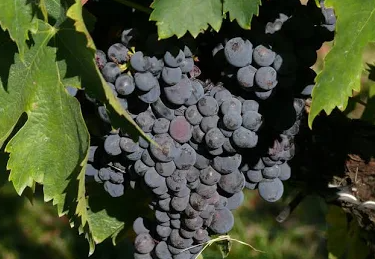
Italy’s Most Tannic Grape Sagrantino is one of the most powerfully tannic red grapes in the world, the formidable native variety of the hills around Montefalco in central Umbria. Dark, dense and built on a colossal structure of tannin, it produces some of Italy’s most concentrated and long-lived reds. Once almost extinct, it has been revived into a modern flagship that places little Montefalco firmly on the map of serious Italian wine.
Origins and History Sagrantino has been grown around Montefalco for centuries, and its name is usually linked to sacro (sacred), suggesting an early association with the Church and with wines made for religious feasts and sacramental use. For most of its history it was made as a sweet, dried-grape passito, and the dry, dramatically tannic style for which it is now famous is a relatively modern development.
A Grape of Montefalco Sagrantino is extraordinarily localised, grown almost entirely in a handful of communes around Montefalco in the green hills of central Umbria. This tiny zone, with its clay-limestone soils and warm continental climate, is the grape’s near-exclusive home, and the Montefalco Sagrantino denomination represents one of the most distinctive and concentrated expressions of place in all of Italian wine.
In the Vineyard A late-ripening variety with thick skins exceptionally rich in tannin and pigment, Sagrantino demands full ripeness and careful handling to avoid harshness. Its near-extinction in the mid-20th century was reversed by a few determined growers who recognised its potential, and modern viticulture focuses on taming its ferocious structure through ripeness, low yields and patience.
Appearance and Structure Sagrantino gives inky, near-opaque wines with massive tannins, full body and good acidity — a structure so imposing that the wines can be austere and unapproachable for years. This is among the most tannic red wine on earth, built for the very long haul, with a concentration and grip that demand both bottle age and the right food.
Aromatic Profile The signature is dark fruit — blackberry, black cherry and plum — framed by tar, liquorice, baking spice, dried herbs, leather and earth. With age it develops notes of dried fruit, tobacco, chocolate and undergrowth. The fruit is dark and brooding, and the overall impression is powerful, spicy and savoury, matching the wine’s formidable structure.
In the Cellar Sagrantino’s enormous tannins demand long, patient ageing in oak to soften and integrate, and the best producers balance extraction and elevage to harness the grape’s power without leaving it brutal. The traditional sweet passito style, made from dried grapes, also survives and offers a rich, structured counterpoint to the famous dry wine.
Key Expressions
- Montefalco Sagrantino (DOCG): the benchmark — inky, massively tannic, long-lived dry reds.
- Montefalco Sagrantino Passito: the traditional sweet, dried-grape style of great structure.
- Montefalco Rosso: a softer, more approachable blend of Sangiovese with a portion of Sagrantino.
- Modern flagship bottlings: ambitious, oak-aged wines that revived the grape’s fortunes.
The Question of Aging Sagrantino is among Italy’s most age-worthy reds, and indeed often requires age to show its best. The wines can be forbidding in youth, their huge tannins needing a decade or more to resolve into a complex weave of dried fruit, spice, leather and earth, after which they hold for many years.
At the Table Its colossal tannins demand rich, fatty, substantial food: braised and roasted red meats, game, wild boar, lamb and the hearty cuisine of Umbria, alongside mature, flavourful cheeses. The wine’s grip is best tamed by protein and fat, which soften its formidable structure.
Why It Matters Sagrantino is the proud, powerful flagship of Umbrian wine — a grape rescued from near-extinction to become one of Italy’s most concentrated, tannic and long-lived reds, and a remarkable example of how a near-forgotten local variety can be revived into a wine of international stature.