
Trebbiano Spoletino
Umbria's most exciting white discovery—a distinct Trebbiano biotype producing fuller, more aromatic wines of genuine complexity around Spoleto.
Trebbiano Spoletino is a grape variety most associated in Italy with Montefalco.
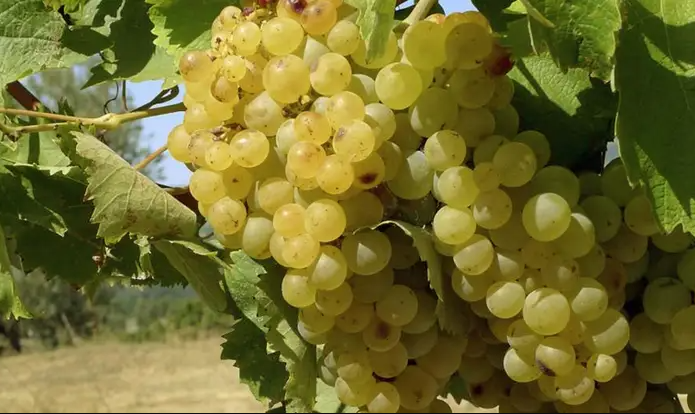
Trebbiano Spoletino is one of the most exciting white grapes in central Italy, a rising star that has emerged from obscurity to challenge everything drinkers thought they knew about Trebbiano. Grown in the heart of Umbria around Spoleto and Montefalco, it produces whites of real structure, salinity and ageworthiness. It is the white counterpoint to the region’s mighty Sagrantino, and a discovery for anyone tired of anonymous Italian whites.
Origins and history Despite its name, Trebbiano Spoletino is a distinct indigenous variety, unrelated in character to the many other grapes that share the Trebbiano label across Italy. Its name most likely derives not from the usual Latin root but from the town of Trevi, near Spoleto in the province of Perugia. For generations it was grown in the old Umbrian tradition, often trained up living maple trees, and it survived quietly until a modern revival brought it renewed attention.
A grape apart What sets Trebbiano Spoletino apart from its namesakes is its combination of abundant aromatics and an unusual ability to hold acidity right through ripening. Where most Trebbiano is neutral and dilute, this one has character, grit and structure. Its rise has been formalised by the granting of DOC status to Spoleto in 2011, cementing its place as Umbria’s serious answer to the great whites of Italy.
Appearance and structure The wines are typically straw yellow, sometimes deepening toward gold in richer, oak-influenced styles. Trebbiano Spoletino is medium-bodied with a firm, refreshing acidity and a pronounced saline, mineral edge that gives it real drive. There is a textural grip and substance here that lends the wine gravitas, allowing it to stand alongside more famous varieties.
Aromatic profile The nose ranges from intensely floral to almost Sauvignon-like, offering white flowers, pear, peach and citrus alongside aromatic herbs and a Mediterranean scrubland note. A retronasal citrus lift and a savoury salinity run through the palate, adding complexity. The overall impression is fresh, herbaceous and distinctly Umbrian, a wine of place rather than mere fruit.
In the vineyard Trebbiano Spoletino is a late-ripening variety, harvested in the second half of October, with naturally low yields and an impressive resistance to disease. Its ability to retain acidity even in the warm Umbrian climate makes it especially valuable, ensuring freshness in the finished wine. The old tree-trained vines that survive lend the variety a romantic, historic dimension prized by its champions.
In the cellar The grape’s versatility is a winemaker’s delight. It can be vinified fresh and floral in stainless steel for immediate charm, given lees ageing and oak for a richer, more structured style, or even made into sparkling and skin-contact wines. Its firm acidity and substance mean it takes well to ambitious cellar work, rewarding experimentation with genuine complexity.
Key expressions
- Fresh, floral steel-fermented whites of saline brightness.
- Structured, oak-aged and lees-aged versions built to age.
- Skin-contact and orange-style interpretations.
- Traditional wines from old tree-trained vines.
The question of aging Unlike most Trebbiano, the Spoletino version is genuinely ageworthy, a quality that has driven much of its recent acclaim. Its firm acidity and salinity allow the best examples to evolve over five to ten years, developing honeyed, nutty and deeply mineral complexity. This capacity to improve in bottle places it among the serious whites of central Italy.
At the table Its acidity, salinity and structure make Trebbiano Spoletino a superb food wine, equally at home with freshwater fish, roast poultry, vegetable dishes and Umbrian specialities such as truffle and legume soups. Fuller versions can even handle richer meats. Its herbal, saline character makes it especially good with Mediterranean cooking. Serve moderately chilled.
Why it matters Trebbiano Spoletino has rehabilitated a name long associated with mediocrity, proving that this Umbrian original is a white of real distinction and depth. It gives its region a serious, ageworthy white to sit beside the powerful Sagrantino, and offers drinkers a fresh, saline and characterful alternative to the mainstream. For those charting Italy’s white-wine renaissance, it is essential.