
Bussanello
An almost-forgotten Veneto white—a likely natural cross of Garganega—surviving in a handful of Veronese vineyards.
Bussanello is a grape variety most associated in Italy with Soave and Soave Classico.
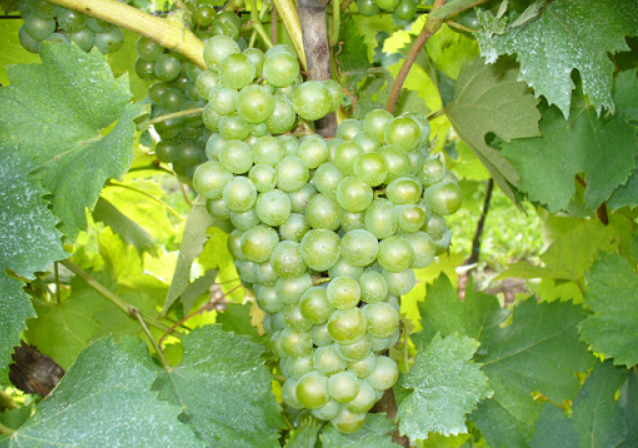
Bussanello is one of the more intriguing modern creations of Italian viticulture, a white crossing born in the laboratory that has found a quiet home in the vineyards of Piedmont. Uniting the traits of two very different parents, it produces fresh, aromatic and delicately mineral whites with a charm all their own. For drinkers curious about how twentieth-century breeders sought to expand Italy’s vinous palette, Bussanello is a fascinating and little-known example.
Origins and history Bussanello is a white grape created by the celebrated grape breeder Professor Giovanni Dalmasso, who crossed Riesling Italico, also known as Welschriesling, with the Hungarian variety Furmint. The cross was made in 1937 at Conegliano in the Veneto, part of Dalmasso’s broader programme of developing new, higher-quality Italian varieties. Though conceived in the north-east, the grape has since become associated above all with Piedmont, particularly the Monferrato.
A breeder’s ambition Dalmasso sought to develop a high-quality white grape with more reliable yields, and by crossing Riesling Italico with Furmint he aimed to temper Furmint’s notorious susceptibility to irregular fruit set while preserving aromatic finesse. The result was Bussanello, a variety that combines productivity with delicacy. Like Dalmasso’s red crossing Albarossa, it reflects the mid-twentieth-century ambition to enrich Italy’s vineyards through careful, purposeful breeding.
Appearance and structure The wines are pale and fresh, light to medium-bodied, with a lively acidity that lends them vibrancy and precision. Bussanello offers a delicate structure and a surprising persistence on the finish, carrying its fresh orchard fruit and mineral notes well. Rather than power or weight, its appeal lies in its poise and freshness, a balanced, harmonious white that reflects the finesse of its parentage.
Aromatic profile Bussanello shows a charming interplay of floral and fruity nuances, with scents of white flowers, green apple and citrus zest alongside subtle hints of pear and apricot. The Riesling Italico parentage contributes a pleasant mineral streak, while the Furmint influence lends a touch of spice and a herbal undertone. The overall impression is fresh, aromatic and delicately complex, with a distinctive wet-stone minerality.
In the vineyard Bussanello is a medium to late-ripening, relatively low-yielding vine, typically harvested toward the end of September or in early October. It has low resistance to disease and is sensitive to grey rot, which demands careful vineyard management. Its later ripening does, however, offer welcome flexibility in harvest timing, a valuable trait in years of variable weather in its adopted Piedmontese home.
In the cellar Bussanello is generally vinified in a fresh, protective style to preserve its delicate aromatics, floral and fruity character, and mineral streak. Cool fermentation in stainless steel captures its lively acidity and precision, yielding bright, harmonious whites. As a rare variety made in small quantities, it tends to be crafted with care by the handful of producers committed to keeping this unusual crossing alive.
Key expressions
- Fresh, aromatic varietal whites from the Piedmontese Monferrato.
- Delicately mineral, steel-fermented bottlings.
- Small-production wines from dedicated growers.
- Whites showcasing its Riesling Italico and Furmint heritage.
The question of aging Bussanello is chiefly a grape for youthful freshness, its delicate aromatics and lively acidity best appreciated within a few years of the vintage. Its acidity does lend the wines a certain vibrancy and persistence, and the more structured examples can hold for a while, but this is not a variety made for long cellaring. Its charm lies in its fresh, precise, aromatic character enjoyed young.
At the table Its freshness, aromatic delicacy and lively acidity make Bussanello an appealing aperitif and a versatile food wine. It flatters seafood and freshwater fish, fresh vegetables, salads, risotto and lighter poultry dishes, and its mineral streak suits delicate, herb-driven fare. The gentle spice from its Furmint parentage adds interest with subtly seasoned dishes. Serve well chilled to accentuate its precision.
Why it matters Bussanello is a fascinating relic of twentieth-century Italian grape breeding, a purposeful crossing that unites the minerality of Riesling Italico with the spice of Furmint. Rare and little known, it survives as a testament to the ambition of breeders like Dalmasso to expand Italy’s white-wine repertoire. For drinkers intrigued by the country’s modern viticultural experiments, Bussanello is an unusual and rewarding find.