
Centesimino
Survived in one walled garden in Faenza, and is named for the man who kept it.
Centesimino is a grape variety most associated in Italy with Forlì and Ravenna.
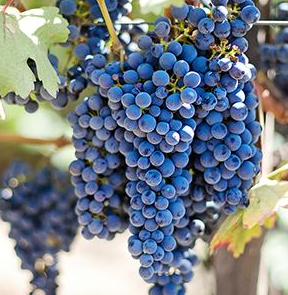
Centesimino survives because one man in Romagna noticed a strange old vine growing in the garden of a noble family’s villa in the middle of Faenza and decided to propagate it. Every Centesimino vine around Oriolo descends from that find. Only in Italy, as D’Agata observes, can a long-lost native variety turn up in the centre of a busy town.
The man it is named after Pietro Pianori of the Terbato estate was nicknamed Centesimino, literally small cent, or tightwad. It was he who took cuttings from that centenary vine, the like of which he had never seen, and propagated them through the countryside around Oriolo. Since the 1960s the variety has carried his nickname in his honour, and without him it would very probably be extinct.
A grape nobody recognised Alessandro Morini of Podere Morini tells a similar story: buying his estate in 1998 he found, among the Sangiovese, a block of roughly forty-year-old vines unlike anything he knew, and assumed they were Sangiovese badly damaged by virus. Asking around taught him it was Centesimino, a grape the local old-timers knew perfectly well and the newcomers did not. Even Veronelli, Italy’s greatest wine writer, did not know it when he visited in 2003, and suggested distilling it for grappa.
Getting on the books Centesimino entered the National Registry only in 2004, after ampelographic work at the CRPV in Tebano, isoenzymatic analysis at Conegliano and DNA profiling at San Michele all’Adige. It is known locally as Savignôn Rosso or Sauvignôn Rosso, and nobody can explain why; the variety is unrelated to Sauvignon Blanc or to any coloured permutation of it. It was also long confused with Grenache, and that has been disproved: the vine known as Alicante del Faentino turns out to be a Centesimino biotype, not the other way round.
In the vineyard The very large, deeply indented leaf is striking. Centesimino ripens early and is often picked in August because it builds sugar so readily, whatever the textbooks say about late September. Leone Conti calls it a very vegetative variety, still pushing out new leaves a fortnight before harvest while producing very little fruit. The grapes shrivel readily on the vine, so it only thrives where the climate is not especially hot, which explains why it never spread.
Appearance and structure The wine is light to medium-bodied with fresh acidity and lively tannins, and it can be distinctly alcoholic because the grape accumulates sugar so easily. Altitude shows clearly: fruit from the higher Val Camone gives lighter, fresher, more refined wine, while Oriolo produces something heavier and more structured. Neither is better; they are simply different.
Aromatic profile Red berries and sweet spices lead, over a lightly aromatic character built on lavender, geranium, bay leaf, rosemary, cinnamon and nutmeg. It is sometimes compared to Lacrima di Morro d’Alba, and that comparison is wrong: Lacrima is markedly more floral, Centesimino more fruity. The two aromatic profiles are not alike to anyone paying attention.
In the cellar Bottlings appear as IGT under the Centesimino name or, more often, as Savignôn Rosso, with Ravenna Rosso, Emilia, Forlì and Rubicone IGTs all in use. The grape’s tendency to dehydrate makes it a natural candidate for passito, and some of the best examples are sweet, though not everyone agrees: Paolo Baini of Vigne dei Boschi does not like his wine sweet, while others argue that a tannic wine benefits from a little sugar.
Key expressions
- Dry reds from Oriolo dei Fichi, the heart of production.
- Lighter, more refined bottlings from the higher Val Camone.
- Passito versions from air-dried grapes, among the grape’s best wines.
- Wines labelled Savignôn Rosso, which are the same thing under the local name.
The question of aging Morini is blunt about it: the wine oxidises very easily and does not age particularly well, giving its greatest pleasure young, on its penetrating spicy, fruity charm. Two to four years is the sensible window for the dry wines. The passiti are the exception and will hold considerably longer, their sugar and tannin working together.
At the table The spice and fresh acidity suit Romagnolo cooking, from grilled meats and piadina with squacquerone to herb-driven pasta and roast poultry. The aromatic lift also makes it unusually good with lightly spiced dishes. Serve it a little cool, around sixteen degrees, to keep the perfume forward.
Why it matters Centesimino is the most literal rescue story in Italian wine: one vine, one curious grower, one town garden. In 1995 local producers formed the Associazione Produttori della Torre di Oriolo to promote it, and a grape that a great wine writer had never heard of in 2003 now has a following. It is a reminder of how thin the thread can be.