
Cornalin
A rare, ancient red native to the Aosta Valley, producing deeply pigmented, aromatic wines with good aging potential at altitude.
Cornalin is a grape variety most associated in Italy with Valle d'Aosta.
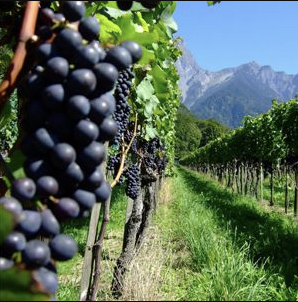
Cornalin is one of the wild, rustic reds of the Alps, a deeply coloured and firmly tannic grape that thrives in the high valleys where Italy meets Switzerland. Almost vanished in its Italian homeland yet flourishing across the border, it produces spicy, structured wines of real mountain character. For drinkers exploring the rare grapes of the Alpine arc, Cornalin is an intriguing and rewarding discovery.
Origins and history The name Cornalin is shared by two distinct but related Alpine grapes, one native to the Valle d’Aosta, known as Cornalin d’Aoste, and one from the Swiss Valais, called Cornalin du Valais. DNA profiling has revealed a fascinating tangle: Cornalin d’Aoste is genetically identical to the Swiss grape Humagne Rouge, and is itself an offspring of Rouge du Pays, which in turn descends from the old Aostan varieties Petit Rouge and Mayolet. It is, in short, deeply rooted in the Alpine family tree.
An Alpine survivor Cornalin d’Aoste took its name from the Aosta Valley where it was long presumed to have originated, but where it is now almost extinct. Its stronghold today lies across the border in the Valais, where under the name Humagne Rouge it enjoys genuine popularity. This makes authentic Aostan Cornalin a true rarity, a grape clinging to survival in its ancestral home while thriving as a Swiss speciality nearby.
Appearance and structure Cornalin yields wines of deep, purplish-red colour that veer toward garnet with age. These are wild, rustic reds, full-bodied and high in tannin, with a firm, structured frame that demands time and food. The combination of deep colour, robust tannin and Alpine freshness gives the wine a rugged, mountainous character quite unlike the softer reds of warmer climes.
Aromatic profile The nose is intense and spicy, offering black cherry, currant and plum alongside pepper, cloves and herbal, aromatic nuances. With age the wines develop notes of vanilla, thyme and tobacco, and the tannins soften into something fuller and more harmonious. The overall impression is of a wild, spice-driven red infused with the herbal scent of the high Alpine meadows.
In the vineyard Cornalin is well adapted to the steep, sunny, well-drained slopes of the Alpine valleys, where it can achieve full ripeness in a short mountain growing season. It is a demanding grape to grow, and its scarcity in the Valle d’Aosta reflects both the difficulty of high-altitude viticulture and the historic shift toward easier varieties. Where it survives, it is tended with care on some of Europe’s most dramatic terraces.
In the cellar Given its firm tannins and structure, Cornalin benefits from careful vinification and a period of ageing to soften and integrate its rugged frame. Oak can add spice and help tame the tannins, while time in bottle brings the wine into balance. The aim is to preserve the grape’s wild, spicy character and deep colour while coaxing its formidable structure toward harmony.
Key expressions
- Rare, structured Valle d’Aosta Cornalin d’Aoste.
- Swiss Valais Humagne Rouge, the same grape across the border.
- Spicy, tannic reds built for the cellar.
- Alpine wines expressing high-altitude terroir.
The question of aging Cornalin’s firm tannins, deep colour and Alpine acidity give it genuine ageing potential. Wild and rustic in youth, the best examples soften over several years into wines of full, pleasantly tannic balance, with spice, tobacco and herbal complexity emerging as the fruit matures. Patience is well rewarded, transforming the grape’s youthful ferocity into mellow, persistent harmony.
At the table Cornalin’s tannin, spice and structure make it a natural partner for the hearty cuisine of the Alps, from game and roast meats to braised dishes, mountain cheeses and cured hams. Its firm frame and freshness cut through rich, fatty fare, while its herbal, peppery character flatters robust, savoury cooking. Serve at cool room temperature to show its balance.
Why it matters Cornalin embodies the wild, rustic character of Alpine viticulture and the tangled heritage of the grapes of the Valle d’Aosta and the Valais. Its near-disappearance in its Italian homeland makes surviving Aostan bottlings especially precious, while its Swiss identity as Humagne Rouge keeps the variety alive. For lovers of rare, structured mountain reds, Cornalin is a compelling taste of the high Alps.