
Fenile
A rare, almost-extinct white native to Campania's islands, found on Ischia alongside Forastera and Biancolella.
Fenile is a grape variety most associated in Italy with Costa d'Amalfi. I have reviewed one wine made from it.
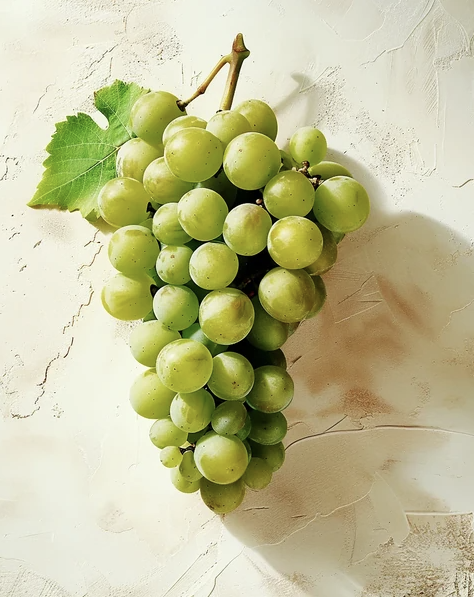
A Rare Amalfi White Fenile is a rare white grape found almost exclusively on the Amalfi Coast of Campania, in southern Italy, where it grows on some of the most dramatic vineyard terraces in the country. Little known on its own, it owes its fame to its role in the celebrated Amalfi Coast white blend that showcases the region’s native grapes. A variety of a single, spectacular terroir, it is a treasured part of the coast’s heroic wine tradition.
A Grape of the Amalfi Coast Fenile is one of a small group of white grapes — alongside Ripoli, Ginestra and Pepella — thought to grow only on the Amalfi Coast, where they have survived for centuries on the steep slopes above the sea. Grown around Furore and the neighbouring villages, Fenile is tied to this narrow, vertiginous stretch of coastline, and its rarity reflects both its limited home and the difficulty of cultivating it.
The Fiorduva Blend Fenile’s renown rests on its part in the famous Amalfi Coast white made from the local trio, a dry blend of roughly forty per cent Ripoli, thirty per cent Fenile and thirty per cent Ginestra. In this celebrated wine, made from grapes picked late and vinified with care, Fenile contributes its distinctive character to a blend prized for aromas of apricot, broom flower and a hint of tropical fruit.
In the Vineyard Fenile is grown on the Amalfi Coast’s astonishing terraced vineyards, where dry-stone walls hold vines against near-vertical slopes high above the Mediterranean. This heroic viticulture, worked entirely by hand and cooled by sea breezes, gives modest yields of characterful fruit. The poor soils, steep terrain and maritime climate together shape the grape, concentrating its flavour on one of Italy’s most extreme wine landscapes.
Appearance and Structure Fenile gives characterful dry whites of medium body, freshness and structure, contributing depth and personality to the blends in which it appears. Grown in so extreme a setting and often picked riper than usual, it lends the wines a certain richness balanced by the freshness of its coastal home. Its structure and character make it more than a mere makeweight in the celebrated Amalfi blend.
Aromatic Profile Fenile is notable for containing the same aromatic compound — TDN — that gives Riesling its characteristic “petrol” or kerosene note, an unusual trait among Italian whites. Alongside this it offers ripe orchard and stone fruit, apricot, broom flower and hints of the Mediterranean, contributing to the apricot and tropical-fruit character of the famous blend. This distinctive, faintly petrolly note sets Fenile apart.
In the Cellar Fenile is vinified mainly as part of the Amalfi Coast white blend, where the grapes are brought whole into the cellar, gently pressed, cold-settled and fermented at cool temperatures, sometimes in barrique, over a period of months. This careful, considered winemaking, applied to late-picked fruit, coaxes richness and complexity from the grape while preserving the freshness and aromatic character that make the blend so admired.
Key Expressions
- Costa d’Amalfi Furore Bianco: the celebrated blend with Ripoli and Ginestra.
- Barrique-fermented cuvées: the richer, oak-influenced version of the blend.
- Amalfi Coast whites: a characterful component of the region’s native-grape wines.
- Terraced single sites: heroic wines from vertiginous coastal vineyards.
The Question of Aging Within the celebrated Amalfi blend, Fenile contributes to a wine with more structure and aging potential than most fresh whites, and the barrique-fermented versions in particular can develop for several years, the fruit deepening and the distinctive aromatics gaining complexity. On the coast’s extreme terraces, the grape’s freshness and structure give the finished wines a resilience unusual among southern whites.
At the Table As part of the Amalfi Coast white, Fenile’s character suits the seafood and coastal cuisine of its home — grilled fish, shellfish, seafood pasta and delicate antipasti — while the richer, barrique-fermented versions can stand up to more substantial fish and white-meat dishes. The blend’s freshness, structure and aromatic complexity make it a versatile and distinguished partner for Mediterranean cooking.
Why It Matters Fenile is one of the Amalfi Coast’s precious native whites — a rare grape of a single, spectacular terroir, saved by the region’s heroic growers and famed for its role in one of southern Italy’s most celebrated white wines. Its unusual, Riesling-like aromatic note and its ties to the vertiginous coastal terraces make it a fascinating emblem of Italy’s vinous diversity.