
Grillo
Sicily's most expressive white—aromatic, full-bodied, and complex, it has overtaken Catarratto as the island's most exciting native white grape.
Grillo is a grape variety most associated in Italy with Alcamo, Marsala and Sicilia. I have reviewed one wine made from it.
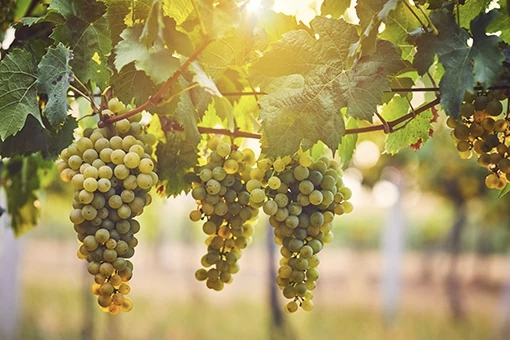
Sicily’s Versatile White Grillo is one of the most important and characterful white grapes of Sicily, a hardy, sun-loving variety that has risen from its historic role as the backbone of Marsala to become a leading source of fresh, flavourful dry whites. Well adapted to the island’s heat, it produces wines of citrus, herbs and a saline, nutty depth that capture the warmth and the maritime freshness of the Sicilian coast.
Origins and Lineage Grillo is a relatively modern Sicilian variety, shown by DNA research to be a natural cross of Catarratto and the aromatic Moscato di Alessandria (Zibibbo). It rose to prominence in the 19th and 20th centuries as the favoured grape for Marsala, the island’s famous fortified wine, prized for its high sugar, resistance to heat and capacity to age oxidatively.
A Grape of Western Sicily Grillo’s heartland is western Sicily, especially the hot, sun-drenched provinces of Trapani and Marsala, where it thrives in the maritime climate and varied soils near the sea. The combination of intense sunshine and cooling coastal breezes gives the grape both ripeness and freshness, the foundation of its modern success as a dry white.
In the Vineyard A vigorous, drought-resistant and heat-tolerant variety, Grillo is well suited to Sicily’s arid climate and was traditionally grown as low alberello bush vines. It ripens to high sugar levels under the southern sun, so quality-minded growers manage yields and harvest timing carefully to retain the acidity and freshness essential to a balanced dry wine.
Appearance and Structure Grillo gives pale to golden whites of medium body, with fresh acidity and a textured, sometimes lightly nutty or saline palate. Modern dry styles are crisp and aromatic, while richer, lees-aged or skin-contact versions show more weight and structure. It balances southern ripeness with a refreshing, savoury edge.
Aromatic Profile The signature is citrus — lemon and grapefruit — lifted by white flowers, green apple, Mediterranean herbs, a hint of tropical fruit and a distinctive nutty, saline character. The wines smell of the sun-warmed Sicilian coast: bright and herbal, with a savoury, almost briny depth that distinguishes Grillo from simpler whites.
In the Cellar Grillo is made in a range of styles: fresh, aromatic, steel-fermented dry whites for early drinking; richer lees-aged and skin-contact bottlings with greater texture; and the traditional oxidative Marsala, where the grape’s structure and resistance to ageing find their historic purpose. Its versatility is a key part of its modern revival.
Key Expressions
- Sicilia Grillo: the modern benchmark — fresh, citrussy, saline dry whites.
- Marsala: the historic fortified wine for which the grape was long prized.
- Lees-aged & skin-contact styles: richer, more textured and characterful dry wines.
- Western Sicily (Trapani, Marsala): the coastal heartland of the variety.
The Question of Aging Most modern dry Grillo is best enjoyed young and fresh, while its citrus and saline character are vivid, but richer, lees-aged and skin-contact examples can develop greater complexity over a few years, and the traditional Marsala is, of course, built for long oxidative ageing.
At the Table Its freshness, salinity and herbal character make Grillo a natural with Sicilian seafood: grilled fish, tuna, swordfish, shellfish, crustacean pasta and fritto misto, as well as vegetable dishes and fresh cheeses. The richer styles can partner more substantial fish and white-meat dishes.
From Marsala to the Modern Table Grillo’s transformation mirrors the wider revolution in Sicilian wine. For generations it was valued only as raw material for Marsala, its potential as a fine dry white entirely overlooked. As Sicily reinvented itself from a source of bulk wine into one of Italy’s most dynamic quality regions, growers turned to Grillo’s natural structure and freshness, and the grape emerged, almost overnight, as a serious and distinctive dry white in its own right.
Why It Matters Grillo embodies the modern renaissance of Sicilian white wine — a hardy, versatile grape that has stepped out from behind Marsala to become a proud source of fresh, saline, sun-filled dry whites, and one of the island’s most successful and characterful native varieties.