
Pigato
Liguria's aromatic white—the western Riviera's name for Vermentino—producing wines of greater body and complexity than its eastern coastal counterpart.
Pigato is a grape variety most associated in Italy with Riviera Ligure di Ponente. I have reviewed one wine made from it.
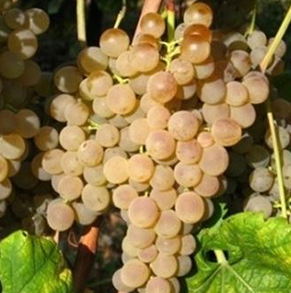
Liguria’s Savoury White Pigato is one of the signature white grapes of Liguria, the narrow coastal region of north-western Italy, where it produces savoury, textured whites of herbs, sea salt and orchard fruit. Grown on the terraced hills of the Riviera di Ponente, it makes some of the region’s most characterful wines — full-flavoured, mineral and unmistakably Mediterranean, tied to the steep, sun-baked coastline that is its home.
A Ligurian Native and Vermentino’s Cousin Pigato is closely associated with Liguria, particularly the western Riviera around Albenga and Imperia, and is genetically identical, or nearly so, to Vermentino, differing mainly in local expression and tradition. Its name is thought to come from the freckled, spotted (pigau in dialect) appearance of its ripe berries. Despite the shared genetics, Ligurians treasure Pigato as a distinct grape with its own character and heritage.
A Grape of the Terraced Coast Pigato thrives on Liguria’s dramatic coastal terraces, where dry-stone walls hold small vineyards against steep hillsides above the sea. This heroic viticulture, on poor, well-drained soils and cooled by maritime breezes, gives the wines their characteristic freshness, herbal character and saline minerality. The interplay of sun, sea and stony soils stamps Pigato with a vivid sense of its rugged coastal origin.
In the Vineyard Pigato ripens well in Liguria’s warm, sunny, maritime climate while keeping good acidity, and its thick-skinned berries give the wines body and flavour. Grown on hand-worked terraces of poor, rocky soil, it yields modest crops of concentrated fruit. The difficult terrain and sea-cooled sites are central to the grape’s savoury, textured, mineral style, rewarding the labour that its cultivation demands.
Appearance and Structure Pigato gives medium-bodied dry whites of real substance, with fresh acidity, a textured, sometimes slightly waxy palate and a savoury, saline finish. Fuller and more structured than many coastal whites, it combines body and grip with freshness, producing wines that feel serious and food-friendly. This weight and texture, allied to a mineral backbone, are the grape’s defining traits.
Aromatic Profile The aromas are distinctly Mediterranean — ripe orchard and stone fruit, citrus, white flowers, Ligurian herbs and a pronounced note of sea salt and bitter almond. This herbal, saline, savoury character, more than overt fruitiness, gives Pigato its personality, evoking the sun-baked, herb-scented coast on which it grows and setting it apart from lighter, fruitier Italian whites.
In the Cellar Pigato is usually vinified in stainless steel to preserve its fresh acidity, savoury character and saline minerality, producing textured, unoaked dry whites. Some producers use lees aging or a touch of oak to add breadth and complexity to the fuller styles. The winemaking generally aims to capture the grape’s herbal, mineral personality and its vivid sense of Ligurian place.
Key Expressions
- Riviera Ligure di Ponente Pigato: the savoury, saline, terraced-coast classic.
- Single-vineyard bottlings: concentrated wines from the best hillside sites.
- Lees- or oak-aged styles: fuller, more textured expressions.
- Coastal food whites: herbal, mineral wines made for Ligurian cuisine.
The Question of Aging Pigato is generally best enjoyed within a few years, when its savoury fruit, herbal character and saline freshness are most vivid, though its structure gives it more staying power than many coastal whites. The finest, more concentrated examples can develop for several years, gaining a deeper, honeyed, nutty savouriness while retaining the mineral cut that defines the grape.
At the Table Pigato is a natural partner for Ligurian cuisine — pesto and herb-rich pasta, seafood and grilled fish, vegetables and fresh cheeses — its savoury, saline character echoing the region’s flavours. Its body and texture let it stand up to richer dishes, while its freshness and herbal edge cut through oil and garlic, making it one of Italy’s great coastal food whites.
Why It Matters Pigato is the savoury soul of Ligurian white wine — a textured, herbal, saline grape born of heroic coastal terraces. Though genetically a form of Vermentino, it has its own proud identity and character, capturing the sun, sea and herbs of the Riviera in a way that makes it inseparable from its rugged, beautiful home.