
Vermentino
The wind-swept white of Liguria and Sardinia—crisp, herbal, and saline, capturing the sea air and Mediterranean scrub of coastal Italy in every glass.
Vermentino is a grape variety most associated in Italy with Vermentino di Gallura, Vermentino di Sardegna, Riviera Ligure di Ponente and Bolgheri. I have reviewed four wines made from it.
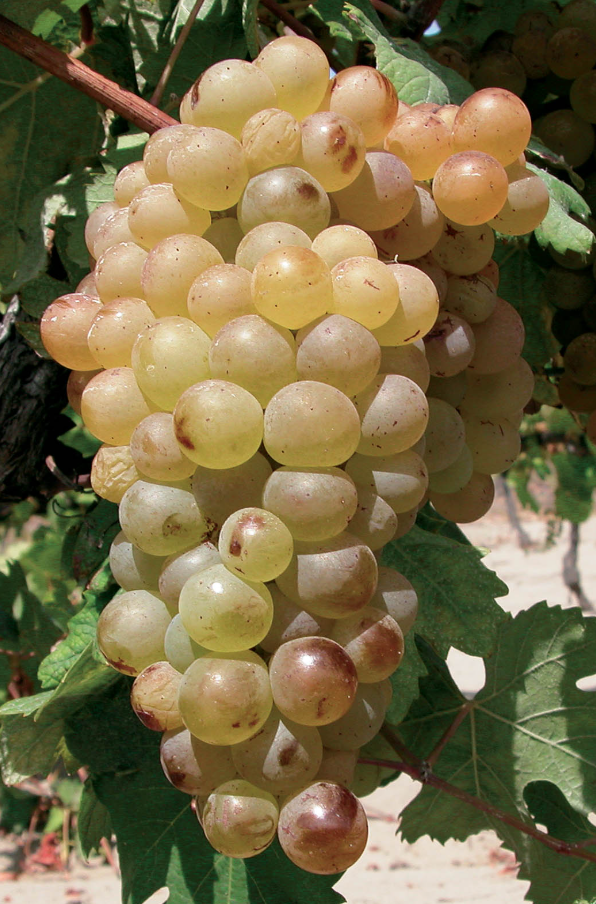
The Mediterranean White Vermentino is one of the great coastal white grapes of the Mediterranean, a sun-loving variety that captures the salt, citrus and herbs of the sea in a glass. Grown the length of Italy’s western seaboard — from Liguria down through Tuscany to Sardinia — it produces fresh, aromatic, gently textured whites that are among the most food-friendly and refreshing in the country. It is the quintessential wine of the Italian coast and its cuisine of fish, olive oil and herbs.
Origins and Lineage Vermentino’s precise origins are debated, but it is firmly established around the western Mediterranean basin and is genetically identical to the grape known as Rolle in southern France and Pigato in parts of Liguria. It likely spread by sea along the coasts and islands, taking root wherever the maritime climate suited it, and has been grown in Sardinia, Liguria and Corsica for centuries.
A Grape of the Coast Vermentino is at its best within reach of the sea, where maritime breezes, sandy or granitic soils and abundant sunshine give the wines their characteristic freshness and saline lift. Sardinia, especially the granite hills of Gallura in the north-east, is considered its finest home, while Liguria and the Tuscan coast produce their own distinctive, herb-scented styles.
In the Vineyard A vigorous, late-ripening variety well adapted to heat and drought, Vermentino thrives in poor coastal soils that naturally restrain its yields and concentrate its flavour. Its thick skins help it withstand sun and sea wind, and the best results come from low-yielding vines on granite or sand, where the grape develops both aromatic intensity and its signature mineral, saline edge.
Appearance and Structure Vermentino gives pale, bright, medium-bodied whites with fresh acidity and a subtly textured, sometimes lightly bitter finish. It balances aromatic lift with a certain weight and grip on the palate, making it more substantial than many simple coastal whites — fresh and thirst-quenching, yet with real presence and length.
Aromatic Profile The signature is citrus — lemon, grapefruit and lime — lifted by white flowers, green apple, pear, Mediterranean herbs and a distinctive note of crushed almond and sea salt. The wines smell of the coast: bright, herbal and saline, with a bitter-almond twist on the finish that is one of the grape’s calling cards.
In the Cellar Most Vermentino is vinified in stainless steel to preserve its fresh, aromatic, saline character for early drinking. A growing number of ambitious producers, however, use lees ageing, large oak or gentle skin contact to build texture, weight and ageability, revealing a more serious, gastronomic side to a grape often dismissed as merely refreshing.
Key Expressions
- Vermentino di Gallura (DOCG): Sardinia’s only DOCG and the grape’s benchmark — mineral, saline and structured, from granite soils.
- Vermentino di Sardegna: fresh, fragrant, everyday island whites from across Sardinia.
- Liguria (incl. Pigato): herb-scented, savoury coastal whites from the Ligurian Riviera.
- Tuscan coast (Bolgheri, Maremma): riper, rounder, sun-filled expressions.
The Question of Aging Most Vermentino is best enjoyed young and fresh, while its aromatics and saline lift are at their peak, but the finest Gallura and oak- or lees-aged examples can develop honeyed, nutty, more textured complexity over several years in bottle.
At the Table Few whites are more obviously made for seafood. Vermentino’s freshness, salinity and herbal lift make it a perfect partner for grilled fish, shellfish, crustacean pasta, fritto misto, pesto, vegetable dishes and fresh cheeses — the entire repertoire of Mediterranean coastal cooking.
Why It Matters Vermentino is the white wine of the Italian coast — a grape that bottles the sun, salt and herbs of the Mediterranean, and which ranges from joyful everyday refreshment to serious, mineral, age-worthy whites in its finest island and coastal forms.