
Sangiovese
Italy’s most planted and shapeshifting grape—capable of producing the rustic joy of Chianti and the immortal power of Brunello.
Sangiovese is a grape variety most associated in Italy with Brunello di Montalcino, Carmignano, Chianti and Chianti Classico. I have reviewed 134 wines made from it.
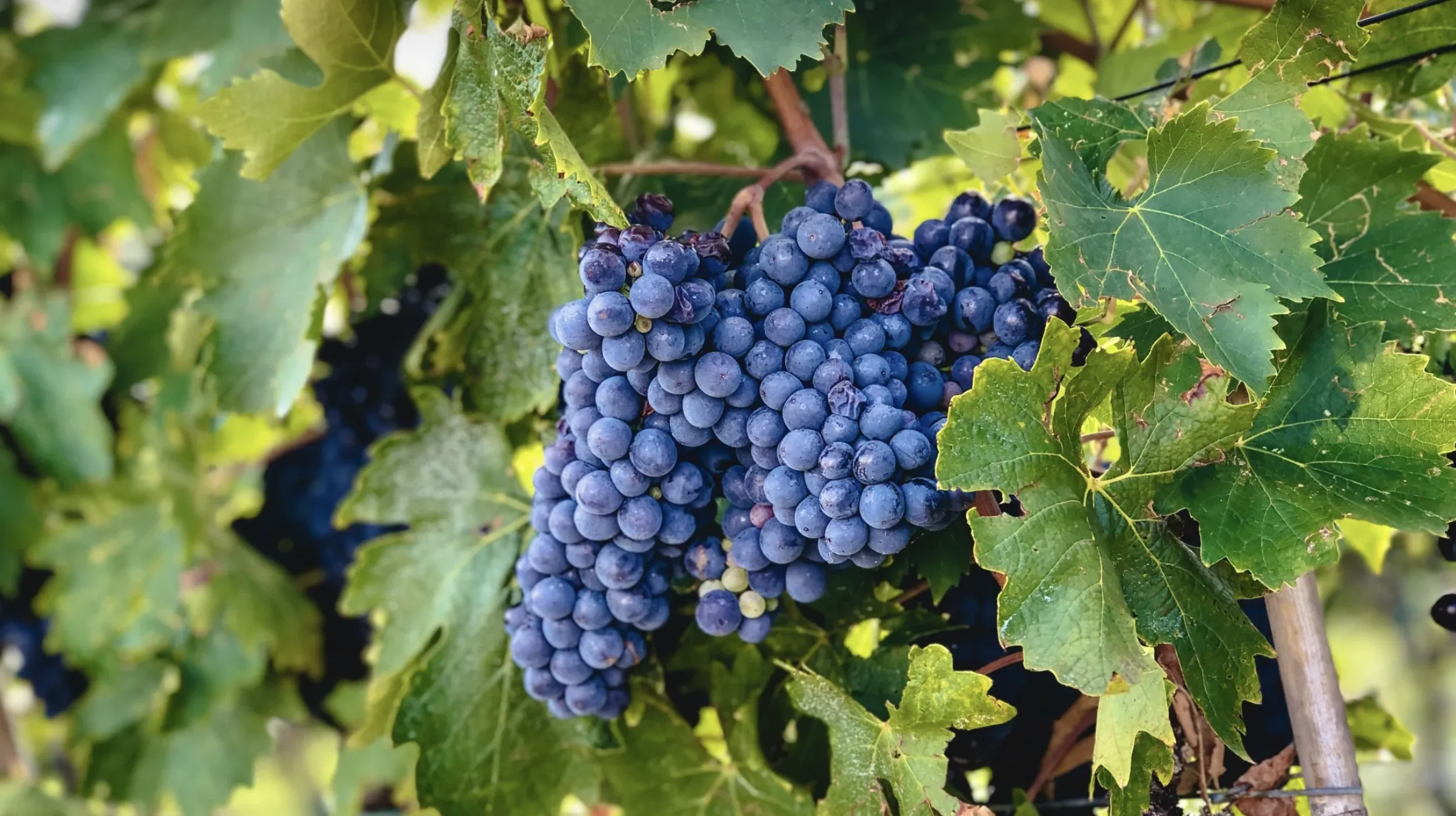
Italy’s Most Planted Grape Sangiovese is the beating heart of central Italian wine and the most widely planted red variety in the country. Its name is usually traced to sanguis Jovis — “the blood of Jove” — a Latin flourish that hints at both its antiquity and the central role it has played in Tuscan life for centuries. From Chianti to Montalcino to the Adriatic coast of Romagna, it is the grape that defines a third of Italy.
A Grape of Many Faces Few varieties are as genetically restless. Sangiovese mutates readily, and over centuries growers have selected dozens of distinct clones and biotypes — known locally as Sangiovese Grosso in Montalcino (where it becomes Brunello), Prugnolo Gentile in Montepulciano, and Morellino in the Maremma. This clonal diversity, combined with extreme site-sensitivity, means Sangiovese can taste like five different grapes depending on where it grows. One name on that list does not belong: Sangiovese Forte, or Sanforte, sounds like another biotype but is a distinct variety with its own entry in the National Registry. It ripens considerably earlier than Sangiovese and accumulates sugar readily, which is why it was planted in Lamole, one of the highest and coolest corners of Chianti Classico, to lift wines that struggled to ripen there.
Appearance and Structure In the glass Sangiovese is typically medium ruby, rarely deeply saturated, and quick to develop garnet tones. Its hallmark is a combination of bright, mouth-watering acidity and firm, slightly grippy tannins — a savoury, structural profile that makes it one of the great food wines of the world rather than a hedonistic crowd-pleaser.
Aromatic Profile The signature is red fruit and earth: sour cherry, red plum and dried strawberry lifted by tomato leaf, dried herbs, balsamic, leather and a characteristic note of warm terracotta. With age it gains tobacco, dried flowers, tea leaf and forest floor. It is rarely opulent; its appeal lies in tension, perfume and savour.
A Grape that Demands Sun and Site Sangiovese ripens late and unevenly, and needs warmth and good exposure to bring its tannins to full maturity — under-ripe, it turns harsh and vegetal. It thrives on the galestro (flaky marl) and alberese (limestone) soils of the Tuscan hills, which lend it minerality and lift. Altitude and aspect are decisive, which is why Tuscany, like Piedmont, has moved steadily toward single-vineyard bottlings.
In the Cellar Historically blended with white grapes and softer reds under the old Chianti recipe, modern Sangiovese is increasingly bottled pure or with small amounts of native Canaiolo and Colorino, or international Cabernet and Merlot. Ageing ranges from neutral large botti — preserving its perfume and savoury edge — to French barrique, which rounds its tannins and deepens colour at the risk of masking varietal character.
Key Expressions
- Chianti Classico: the historic heartland between Florence and Siena; medium-bodied, savoury and structured, now expressed through the Gran Selezione tier and the village-like UGA sub-zones.
- Brunello di Montalcino: the most powerful and long-lived expression, 100% Sangiovese Grosso, capable of decades in the cellar.
- Vino Nobile di Montepulciano: plush and approachable, built on the Prugnolo Gentile clone.
- Morellino di Scansano & the Maremma: warmer coastal sites giving riper, softer, earlier-drinking wines.
- Romagna: the grape’s other home on the Adriatic side, producing fresher, more everyday styles.
The Question of Aging The best Sangiovese — Brunello and serious Chianti Classico Riserva — ages superbly, its acidity and tannin acting as a preservative while the fruit slowly turns to dried cherry, leather, tobacco and undergrowth. Lesser examples are built for the table within a few years of release.
At the Table No grape is more obligingly Italian at dinner. Sangiovese’s acidity cuts tomato, its tannins meet grilled meat, and its savour flatters cured salumi, aged pecorino, bistecca alla fiorentina and wild boar ragù. It is arguably the most food-friendly red in the world.
Why Sangiovese Matters Sangiovese is the grape through which Italy speaks most clearly: savoury rather than sweet, structured rather than showy, and inseparable from the food and landscape of Tuscany. To understand it is to understand the Italian idea of wine itself — that the bottle exists to serve the table.
Reviews for Sangiovese
Show 125 more reviews
- 2022 Tenuta di Carleone “Il Guercio” Toscana96
- 2019 Pian dell’Orino “Vigneti del Versante” Brunello di Montalcino100
- 2021 Pian dell’Orino Rosso di Montalcino94
- 2013 Le Ragnaie “Vecchie Vigne VV” Brunello di Montalcino96
- 2022 Gaja Ca’Marcanda “Promis” Toscana92
- 2022 Fuligni “Ginestreto” Rosso di Montalcino94
- 2022 Colombaio “Campale” Chianti91
- 2023 Ampeleia “UnLitro” Toscana90
- 2017 Mazzei “Siepi” Toscana96
- 2024 Poggiarellino Rosso di Montalcino93
- 2024 Fattoria Le Pupille Morellino Di Scansano95
- 2021 CastelGiocondo Brunello Di Montalcino95
- 2021 Castello Banfi Brunello Di Montalcino95
- 2021 Altesino Brunello Di Montalcino96
- 2011 Bibbiano Vigna Capannino Chianti Classico Gran Selezione95
- 2019 La Fortuna Brunello Di Montalcino96
- 2023 La Fortuna Rosso Di Montalcino93
- 2024 San Lorenzo “Vigna Di Gino” Marche Rosso Montepulciano Sangiovese92
- 2019 Casanova di Neri “Cerretalto” Brunello Di Montalcino99
- 2023 Casanova di Neri Rosso Di Montalcino93
- 2021 Fontodi Chianti Classico96
- 2016 Castello di Romitorio “Filo di Seta” Brunello di Montalcino Riserva99
- 2019 Castello di Romitorio “Filo di Seta” Brunello di Montalcino Riserva97
- 2020 Castello di Romitorio “Filo di Seta” Brunello di Montalcino96
- 2021 Castello di Romitorio “Filo di Seta” Brunello di Montalcino97
- 2021 Castello di Romitorio Brunello di Montalcino96
- 2022 Fèlsina Chianti Classico Riserva95
- 2022 Tenute Silvio Nardi Rosso di Montalcino92
- 2023 Tua Rita “Rosso dei Notri” Toscana Super Tuscan92
- 2024 Piccolo Goccio Sangiovese90
- 2021 Fèlsina Fontalloro Toscana96
- 2021 Vecchie Terre di Montefili Chianti Classico95
- 2017 San Filippo Le Lucere Brunello Di Montalcino95
- 2023 Cerbaiona Rosso di Montalcino95
- 2021 Cerbaiona Brunello di Montalcino99
- 2021 Ciacci Piccolomini d’Aragona “Pianrosso” Brunello di Montalcino96
- 2021 Ciacci Piccolomini d’Aragona Brunello di Montalcino93
- 2021 Tua Rita “Perlato Del Bosco” Toscana Sangiovese94
- 2020 Chiara Condello Romagna Sangiovese Predappio94
- 2021 Talenti Brunello “Piero” di Montalcino95
- 2021 Talenti Brunello di Montalcino94
- 2021 Fattoria dei Barbi “Vigna Fiore” Brunello di Montalcino94
- 2021 Fattoria dei Barbi Brunello di Montalcino94
- 2021 Uccelliera Brunello Di Montalcino95
- 1998 Biondi Santi (Tenuta Greppo) Brunello di Montalcino94
- 2021 Casanova di Neri “White Label” Brunello di Montalcino95
- 2021 Casanova di Neri “Tenuta Nuova” Brunello di Montalcino96
- 2021 Casanova di Neri “Giovanni Neri” Brunello di Montalcino96
- 2018 Gaja Pieve Santa Restituta “Sugarille” Brunello di Montalcino95
- 2019 Ferrero Brunello di Montalcino Riserva94
- 2020 Ferrero Brunello di Montalcino94
- 2024 Baricci “Montosoli” Rosso di Montalcino96
- 2021 Baricci “Montosoli” Brunello di Montalcino98
- 2019 Baricci “Montosoli” Brunello di Montalcino Riserva96
- 2020 Fuligni Brunello di Montalcino Riserva “Centenario”98
- 2019 Fuligni Brunello di Montalcino Riserva99
- 2021 Fuligni Brunello di Montalcino99
- 2023 Fuligni “Ginestreto” Rosso di Montalcino95
- 2021 La Gerla “La Pieve” Brunello Di Montalcino98
- 2021 La Gerla Brunello Di Montalcino96
- 2021 Gianni Brunelli Brunello Di Montalcino99
- 2022 Antinori Tignanello Toscana96
- 2014 Avignonesi Vino Nobile di Montepulciano (Library Release)96
- 2020 Poggiarellino Brunello di Montalcino95
- 2016 Poggiarellino Brunello di Montalcino Riserva97
- 2022 Livio Sassetti “Pertimali” Rosso di Montalcino95
- 2020 Fattoria dei Barbi “Vigna del Fiore” Brunello di Montalcino95
- 2020 Fattoria dei Barbi Brunello di Montalcino93
- 2020 Banfi Brunello di Montalcino94
- 2018 Biondi Santi Brunello di Montalcino Riserva 97
- 2019 Biondi Santi Brunello di Montalcino97
- 2022 Biondi Santi Rosso di Montalcino96
- 2021 Fèlsina “Rancia” Chianti Classico Gran Selezione97
- 2021 Fèlsina Chianti Classico Riserva94
- 2022 Fèlsina Berardenga Chianti Classico94
- 2023 Fèlsina Chianti Colli Senesi93
- 2020 Casanova di Neri “Giovanni Neri” Brunello di Montalcino98
- 2020 Casanova di Neri “Tenuta Nuova” Brunello di Montalcino97
- 2020 Casanova di Neri “White Label” Brunello di Montalcino96
- 2020 Fuligni Brunello di Montalcino97
- 2020 Ciacci Piccolomini d’Aragona Brunello di Montalcino95
- 2022 Antinori Solaia96
- 2020 Costanti Brunello di Montalcino98
- 2021 Castello di Ama “San Lorenzo” Chianti Classico Gran Selezione97
- 2019 Malgiacca ‘Malgiacca’ Super Tuscan96
- 2022 Bocale Montefalco Rosso94
- 2021 Fontodi “Flaccianello della Pieve” Toscana98
- 2019 San Polino Brunello Di Montalcino96
- 2022 Sesta di Sopra Rosso Di Montalcino93
- 2022 Il Palio Chianti Colli Senesi90
- 2019 Podere Le Ripi “Amore e Magia” Brunello di Montalcino95
- 2019 Podere Le Ripi “Cielo d’Ulisse” Brunello di Montalcino96
- 2019 Livio Sassetti “Pertimali” Brunello di Montalcino96
- 2021 Isole e Olena “Cepparello” Toscana98
- 2021 Isole e Olena Chianti Classico94
- 2014 Tenuta Bibbiano “Bibbianaccio”95
- 2018 Castello di Ama “Vigneto Bellavista” Chianti Classico Gran Selezione98
- 2019 CastelGiocondo Brunello di Montalcino95
- 2021 Montevertine Toscana97
- 2021 Tenuta di Carleone “Uno” Toscana96
- 2020 Il Marroneto “Madonna Delle Grazie” Brunello di Montalcino DOCG99
- 2020 Il Marroneto Brunello di Montalcino DOCG97
- 2021 Carleone Chianti Classico96
- 2023 San Lorenzo Vigna Di Gino Marche Rosso93
- 2015 Castello Fonterutoli ‘MIX 36’ Toscana Sangiovese95
- 2019 Vecchie Terre di Montefili Chianti Classico95
- 2015 Castello Fonterutoli Chianti Classico Gran Selezione96
- 2020 Castello di Romitorio Brunello di Montalcino96
- 2022 Montepeloso “Eneo” Toscana95
- 2019 Banfi Brunello di Montalcino94
- 2019 Caparzo “La Casa” Brunello di Montalcino94
- 2019 Caparzo Brunello di Montalcino94
- 2019 Talenti Brunello di Montalcino96
- 2020 Fèlsina “Rancia” Chianti Classico Riserva96
- 2019 Talenti “Piero” Brunello di Montalcino98
- 2020 Fèlsina Fontalloro Toscana98
- 2019 Poggiarellino Brunello di Montalcino94
- 2021 Caiarossa “Caiarossa” Toscana97
- 2020 Piaggia Carmignano Riserva97
- 2022 Le Chiuse Rosso di Montalcino97
- 2017 Il Paradiso di Frassina “Moz Art Wine” Brunello di Montalcino93
- 2018 La Gerla Brunello di Montalcino95
- 2018 Tenuta Monteti “Caburnio”90
- 2020 Avignonesi Vino Nobile di Montepulciano96
- 2021 Antinori “Tignanello” Toscana97