
Croatina
A rustic Lombard red, core to the spritzy Bonarda dell'Oltrepò style, with rich dark fruit and firm tannins when vinified dry.
Croatina is a grape variety most associated in Italy with Oltrepò Pavese, Bramaterra and Coste della Sesia. I have reviewed one wine made from it.
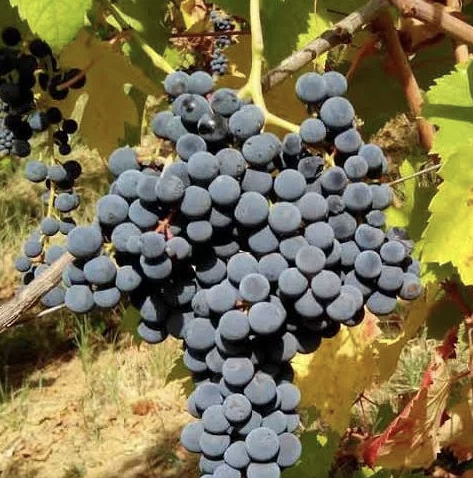
The Dark Red of Oltrepò Croatina is a characterful native red grape of north-western Italy, grown above all in the Oltrepò Pavese of Lombardy and the neighbouring hills of Piedmont and Emilia. Deeply coloured, fruity and gently tannic, it is often made in a lively, lightly sparkling style, and is widely — if confusingly — sold under the name Bonarda. It is one of the most distinctive everyday reds of the north-west.
Not Crova Croatina is one and the same as several locally named vines, among them Uva Vermiglia, Uga del Zio, Crovattina and Neretto. It should not be confused with Crova, which is better known as Lambrusca di Alessandria: a similarly named but different and, for wine, distinctly lower-quality grape. The variety has very high intravarietal variability, which is why so many names attached to it in the first place.
A Confusing Name Croatina is the source of much of the wine labelled Bonarda in the Oltrepò Pavese, even though true Bonarda is a separate Piedmontese grape — a long-standing confusion of names typical of Italian viticulture. Despite the muddle, Croatina is a distinct and important variety in its own right, the backbone of the dark, often frizzante reds that the region drinks every day.
A Grape of the North-West Croatina’s heartland is the Oltrepò Pavese, the hilly wine zone south of the Po in Lombardy, and it extends into the Colli Piacentini of Emilia and parts of Piedmont. The clay and limestone hillside soils and the continental climate of these zones give the grape its deep colour, fruit and the fresh acidity that suits its lively, frequently sparkling style.
In the Vineyard A vigorous, late-ripening variety, Croatina has thick skins that give deep colour and firm tannins, and it crops generously, which suits its role as an everyday wine. It can be tricky to ripen fully, and careful site selection and yield control are needed to avoid harshness and achieve the ripe, dark fruit that marks its best examples.
Appearance and Structure Croatina gives deeply coloured, purple-tinged wines of medium to full body, with moderate to firm tannins and fresh acidity. It is a grape of dark fruit and gentle grip, often made in a frizzante style that lightens its structure and emphasises its juicy, fruity character, though still, more structured versions are also made.
Aromatic Profile The signature is dark fruit — blackberry, black cherry and plum — with notes of dried herbs, spice, a touch of pepper and a faintly bitter, savoury edge. The fruit is dark and generous, and in the frizzante style the wines are juicy and refreshing, the gentle sparkle lifting the fruit and balancing the grape’s tannins.
In the Cellar Croatina is made in several styles: the classic lightly sparkling frizzante red that the Oltrepò drinks daily, still dry reds of more structure, and sweeter versions. It is also blended with other local grapes. The frizzante style, made by tank or traditional methods, is the most characteristic, balancing the grape’s dark fruit and tannin with refreshing sparkle.
Key Expressions
- Oltrepò Pavese Bonarda: the classic, often frizzante red of Lombardy, made from Croatina.
- Still Croatina: more structured, dry red bottlings of greater depth.
- Colli Piacentini Gutturnio: a blend of Barbera and Croatina from neighbouring Emilia.
- Piedmontese bottlings: characterful reds from the grape’s western range.
The Question of Aging Most Croatina, especially the frizzante style, is made for fresh, fruity, early drinking, prized for its juicy character. The more structured still versions can age for a few years, the dark fruit deepening, but the grape’s appeal lies chiefly in its youthful, lively fruitiness rather than long cellaring.
At the Table Its dark fruit, gentle tannin and fresh, often sparkling character make Croatina a versatile everyday food red, perfect with the rich cuisine of Lombardy and Emilia: salumi and cured meats, pasta, risotto, roast and braised meats and cheeses. The frizzante style is especially good with the region’s charcuterie.
Why It Matters Croatina is the dark, juicy everyday red of north-western Italy — the true grape behind much of the Oltrepò’s beloved Bonarda, and a characterful, food-friendly variety that, despite the confusion over its name, is one of the region’s most distinctive and widely enjoyed wines.