
Tai Rosso
Grenache under its Veneto name, and the flagship red of the Colli Berici.
Tai Rosso is a grape variety most associated in Italy with Colli Berici.
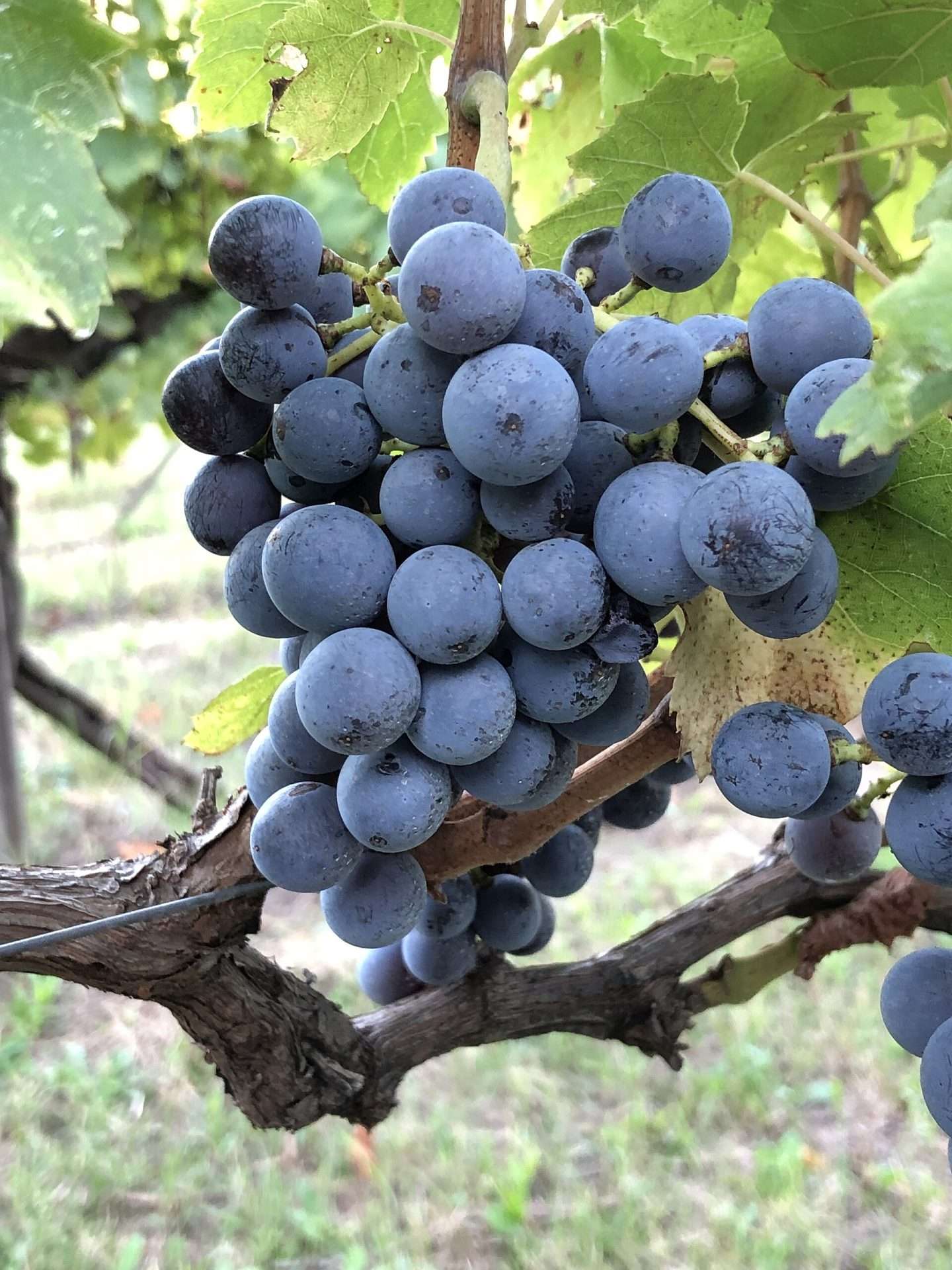
Tai Rosso belongs to the Grenache family, and is most correctly described as a biotype of Cannonau. The full guide lives on the Grenache page. Tai Rosso is the name the variety carries in the Colli Berici, in the province of Vicenza.
Where the name came from It used to be Tocai Rosso. That ended with the European ruling that reserved the name Tokaj to Hungary, which also forced Friuli’s Tocai Friulano to become simply Friulano. The Veneto’s red version was left as Tai Rosso, a name that means nothing in particular and that nobody outside the Colli Berici recognises.
Not quite identical, though A 2011 study found that Garnacha from Spain, Alicante from Sicily, Tocai Rosso from the Veneto, Cannonau from Sardinia and Gamay Perugino from Umbria all shared the same genetic profile. One allele nonetheless separates Tocai Rosso from both Cannonau and Garnacha, so D’Agata treats it as a biotype of Cannonau rather than the identical grape, adapted over centuries to a completely different environment. The vines look slightly different too: Tai Rosso has larger, more compact bunches and thicker-skinned berries.
One grape group, several Italian identities Grenache has been in Italy long enough to have acquired local names in several regions, and each carries its own wine tradition: Cannonau in Sardinia, Alicante in Tuscany, Guarnaccia on Ischia, and Tai Rosso in the Colli Berici. The vine is the same; the wines are not interchangeable.
What the Colli Berici does with it. The Berici hills are cooler than Grenache’s southern homes and the volcanic and limestone soils give a lighter, more perfumed, less alcoholic wine than Cannonau or the wines of the southern Rhône. It is bottled under the Colli Berici DOC and drunk young and local, and it is one of the more surprising things in the Veneto’s repertoire.
For origins, ampelography, viticulture and the international picture, see Grenache.