
Verdicchio
Marche's golden gift—producing some of Central Italy's most age-worthy whites, with a characteristic bitter almond finish and striking mineral complexity in Castelli di Jesi and Matelica.
Verdicchio is a grape variety most associated in Italy with Castelli di Jesi Verdicchio Riserva, Verdicchio dei Castelli di Jesi, Verdicchio di Matelica and Verdicchio di Matelica Riserva. I have reviewed five wines made from it.
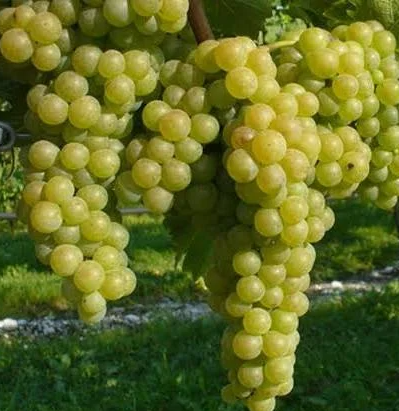
The Marche’s Great White Verdicchio is the finest native white grape of the Marche on Italy’s Adriatic coast, and one of the most underrated quality whites in the entire country. Capable of remarkable freshness in youth and a surprising, almost unsung ability to age, it produces wines of citrus, almond and saline minerality that have quietly earned a reputation among connoisseurs as among Italy’s most serious and rewarding whites.
Origins and Lineage Verdicchio takes its name from verde (green), a reference to the greenish tinge of its grapes and its wines. Modern DNA research has revealed it to be identical to Trebbiano di Soave and to the Trebbiano di Lugana (or Turbiana) of Lake Garda, making it a far more widespread and important variety than its modest Marche reputation might suggest, even if its name changes from region to region.
A Grape of Two Zones Verdicchio’s quality heartland lies in two neighbouring Marche denominations. Castelli di Jesi, nearer the coast, produces the larger volume and a broad range of styles; Matelica, a small inland valley, gives a firmer, more mineral, often longer-lived wine. Together they represent the grape at its serious best, the inland and coastal expressions offering a fascinating study in terroir.
In the Vineyard A vigorous, late-ripening variety, Verdicchio keeps excellent acidity even when fully ripe, which is the foundation of both its freshness and its ageworthiness. The best wines come from hillside vineyards farmed for restrained yields, where the grape develops concentration and its characteristic mineral, saline depth rather than the dilute neutrality of overcropped vines.
Appearance and Structure Verdicchio gives pale, often greenish-gold whites of medium body with bright, persistent acidity and a textured, structured palate. It is a white of real substance and length, combining freshness with weight, and finishing with the distinctive bitter-almond note that marks it out and gives the wines their savoury, gastronomic character.
Aromatic Profile The signature is citrus and green apple lifted by white flowers, fennel, aniseed, a saline minerality and the unmistakable note of bitter almond. With bottle age it develops honey, dried fruit, nuts and a waxy, petrol-tinged complexity that draws comparison with aged Riesling, revealing depths few expect from the grape.
In the Cellar Verdicchio is made across a wide spectrum: crisp, fresh, steel-fermented wines for early drinking, richer lees-aged and oak-influenced styles, and serious Riserva bottlings built for the cellar. Its naturally high acidity also makes it a fine base for traditional-method sparkling wine and for the region’s passito dessert wines.
Key Expressions
- Verdicchio dei Castelli di Jesi (incl. Riserva DOCG): the broad heartland, from fresh everyday whites to age-worthy Riserva.
- Verdicchio di Matelica (incl. Riserva DOCG): firmer, more mineral, longer-lived wines from the inland valley.
- Sparkling & passito: traditional-method sparkling and sweet dried-grape styles.
- Trebbiano di Soave / di Lugana: the same grape under other names in the Veneto and Lake Garda.
The Question of Aging This is one of Italy’s great hidden cellar whites. While much Verdicchio is enjoyed young, the best Riserva and Matelica bottlings age superbly for a decade or more, the citrus and almond deepening into honey, nuts, dried fruit and a waxy, mineral complexity that rewards patience handsomely.
At the Table Its acidity, salinity and almond finish make Verdicchio a superb food white, especially with the Adriatic’s seafood: grilled and fried fish, brodetto, shellfish, crustacean pasta, and the region’s stuffed olives and white meats. The richer, aged styles can stand up to more substantial dishes.
Why It Matters Verdicchio is the Marche’s gift to serious white-wine lovers — a grape of freshness, salinity and unexpected longevity that, despite a long-faded reputation for cheap wine in novelty bottles, ranks among the very finest and most age-worthy whites Italy produces.