
Nebbiolo
The grape of "Tar and Roses"—pale in color, profound in structure, and arguably Italy's greatest noble variety.
Nebbiolo, also known as Spanna, Chiavennasca and Picotendro, is a grape variety most associated in Italy with Barbaresco, Barolo, Gattinara and Ghemme. I have reviewed 164 wines made from it.
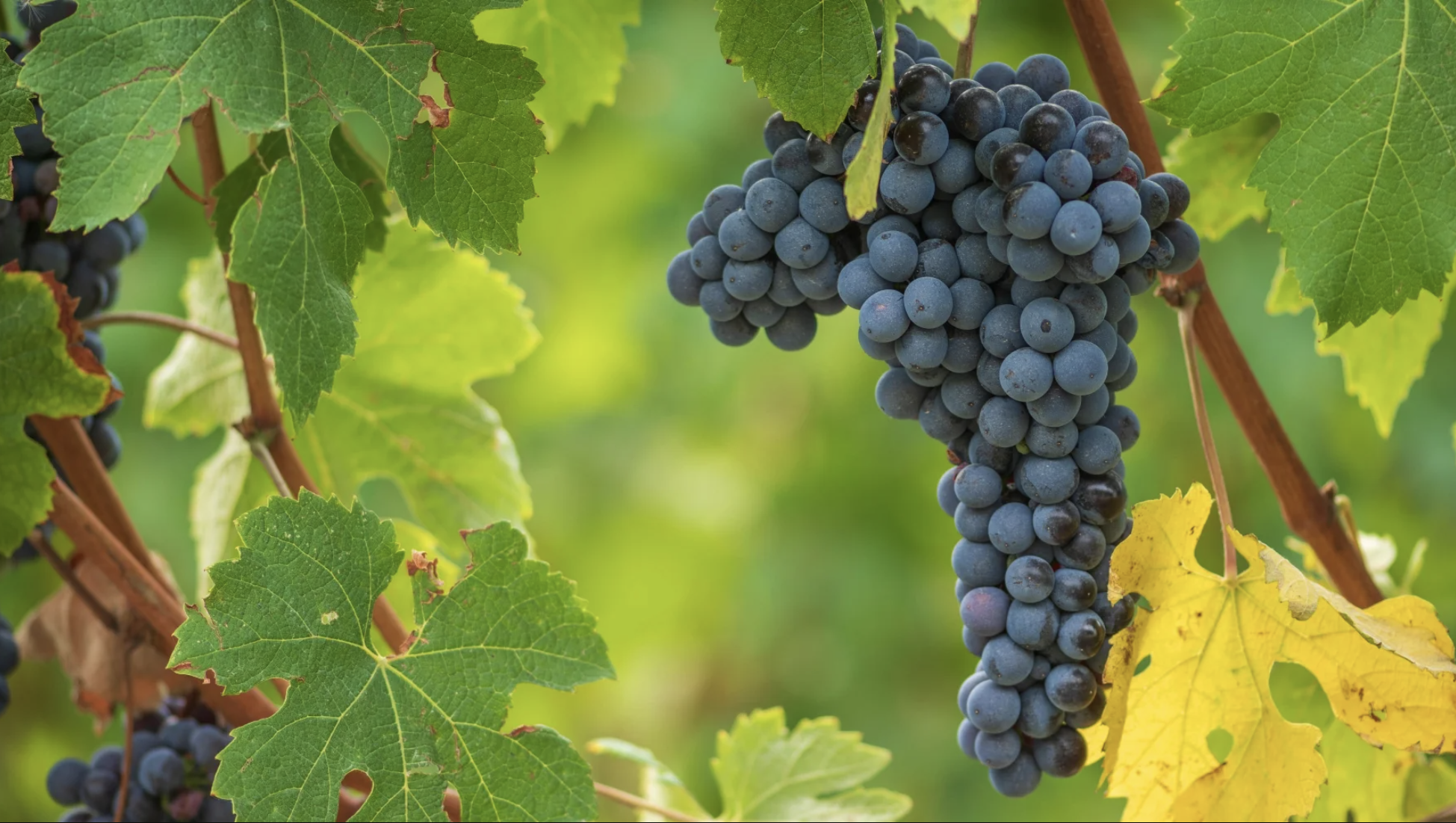
The Fog Grape Nebbiolo takes its name from nebbia, the thick autumn fog that settles over the Piedmontese hills as the grape ripens — among the last to be picked, often well into late October. Some attribute the name instead to the milky, fog-like bloom that coats the berries at harvest. Either way, the word fixes the grape to a place and a moment: the cold, mist-bound autumns of north-west Italy, where Nebbiolo has been documented since at least the 13th century.
An Ancient Northern Native DNA profiling has confirmed Nebbiolo as one of Italy’s oldest and most genetically influential varieties, parent or close relative to a string of regional grapes including Vespolina and Freisa. It is also stubbornly local: despite centuries of fame, it has never travelled successfully. Plantings in California, Australia and Argentina remain marginal, because Nebbiolo demands a combination of long, slow ripening and specific soils that almost nowhere outside its homeland can provide.
The Great Paradox No grape contradicts itself so beautifully. In the glass Nebbiolo is pale — translucent garnet, often browning to a brick-orange rim within just a few years. The eye expects something delicate. The palate delivers the opposite: ferocious tannin, searing acidity and formidable structure. It is this tension — fragile colour wrapped around an iron frame — that allows the finest examples to age for thirty, forty, fifty years.
A Grape Obsessed with Site Nebbiolo is the most terroir-transparent of all Italian varieties. It insists on calcareous marl soils and the warmest, south-facing exposures to ripen its tannins fully; planted on lesser sites it turns harsh and green. This sensitivity is why growers in the Langhe have mapped their hillsides into named crus — Cannubi, Brunate, Rabajà — with an obsessiveness more often associated with Burgundy.
Tar and Roses The aromatic signature is unmistakable and unique: dried rose petal and sour cherry lifted over tar, leather, anise, dried herbs, white truffle and wet earth. Young examples can be austere and closed; with air and age they unfurl into something haunting and almost ethereal, evolving in the glass minute by minute.
In the Cellar Winemaking splits along a famous philosophical line. Traditionalists favour long macerations and extended ageing in large old botti, preserving aromatic purity and demanding patience. Modernists shorten maceration and use French barriques for a deeper-coloured, earlier-drinking style. The best growers today blend both schools, chasing perfume and structure without heavy oak.
Key Expressions
- Barolo & Barbaresco (the Langhe): the purest, most powerful statements of the grape, grown on ancient marine marls. Barolo is the more muscular and long-lived; Barbaresco a touch more perfumed and approachable.
- Roero: across the Tanaro on sandier soils, giving softer, more fragrant, earlier-drinking Nebbiolo.
- Alto Piemonte (Spanna): in Gattinara, Ghemme, Lessona and Bramaterra the grape is called Spanna and grown on volcanic, acidic soils — wines that are leaner, more mineral and nervy.
- Valtellina (Chiavennasca): on the vertiginous alpine terraces of Lombardy, Nebbiolo produces lighter, high-altitude wines of remarkable elegance, plus the dried-grape Sforzato. Do not confuse Chiavennasca with Chiavennaschino, which is often reported as Grignolino and is nothing of the kind: it is Nebbiolo Rosé, a variety distinct from Nebbiolo despite the name.
The Question of Aging Few red wines reward patience like Nebbiolo. The classic structure — high tannin, high acid — is precisely the architecture great cellaring demands. A serious Barolo can be unforgiving in its first decade and only begins to show its true character at fifteen years, resolving its tannins into dried roses, truffle and tar.
At the Table Those tannins crave fat and protein. Nebbiolo is the natural partner to Piedmont’s own table: braised beef brasato al Barolo, tajarin with butter and sage, aged Castelmagno, and above all the white truffle of Alba, whose savoury perfume mirrors the wine’s own.
Why Nebbiolo Matters For all the international acclaim of Italy’s other reds, Nebbiolo remains the country’s most profound and uncompromising variety — a grape that refuses to travel, refuses to flatter in youth, and rewards those who understand it with some of the longest-lived, most intellectually compelling wines in the world.
Reviews for Nebbiolo
Show 155 more reviews
- 2020 Produttori del Barbaresco “Montefico” Barbaresco Riserva96
- 2020 Produttori del Barbaresco “Muncagota” Barbaresco Riserva96
- 2020 Produttori del Barbaresco “Ovello” Barbaresco Riserva94
- 2020 Produttori del Barbaresco “Rabajà” Barbaresco Riserva96
- 2020 Produttori del Barbaresco “Rio Sordo” Barbaresco Riserva95
- 2013 Proprietà Sperino Lessona94
- 2021 Poderi Einaudi “Bussia” Barolo95
- 2021 Poderi Einaudi “Cannubi” Barolo96
- 2021 Poderi Einaudi “Terlo – Costa Grimaldi” Barolo96
- 2021 Massolino Barolo94
- 2013 Flavio Roddolo Nebbiolo d’Alba96
- 2022 G.D. Vajra “Bricco delle Viole” Barolo97
- 2017 Ar.Pe.Pe “Rocca de Piro” Grumello Valtellina Superiore95
- 2017 Ar.Pe.Pe “Stella Retica” Sassella Valtellina Superiore94
- 2019 Ar.Pe.Pe “Pettirosso” Valtellina Superiore90
- 2022 Ar.Pe.Pe Rosso di Valtellina90
- 1964 Giacomo Borgogno & Figli Barolo Riserva94
- 2020 Giacomo Conterno “Francia” Barolo97
- 2013 Ar.Pe.Pe “Sant’Antonio” Grumello Valtellina Superiore Riserva93
- 2017 Ar.Pe.Pe “Fiamme Antiche” Inferno Valtellina Superiore Riserva94
- 2024 Matteo Ascheri Langhe Nebbiolo93
- 2017 Elio Grasso “Gavarini Chiniera” Barolo96
- 2022 G.D. Vajra “Ravera” Barolo95
- 2019 Massolino “Vigna Rionda” Barolo Riserva97
- 2016 Paolo Scavino Barolo95
- 2015 Ettore Germano “Cerretta” Barolo96
- 2013 Ettore Germano “Prapò” Barolo96
- 2016 Giulia Negri “La Tartufaia” Barolo95
- 2024 Cascina Alberta Nebbiolo Langhe95
- 2024 Fratelli Barale Langhe Nebbiolo94
- 2021 Fratelli Barale Barolo96
- 2006 Malvirà Trinita Roero Riserva94
- 2010 Malvirà Trinita Roero Riserva96
- 2010 Malvirà Renesio Roero Riserva96
- 2011 Malvirà Renesio Roero Riserva94
- 2013 Malvirà Mombeltramo Roero Riserva96
- 2014 Malvirà Mombeltramo Roero Riserva94
- 2016 Malvirà Mombeltramo Roero Riserva96
- 2022 G.D. Vajra “Coste Di Rose” Barolo94
- 2021 Massolino “Parussi” Barolo96
- 2021 Massolino “Margheria” Barolo96
- 2023 Gianfranco Bovio ‘Firagnetti’ Langhe Nebbiolo96
- 2024 Bianchi “Il Rosato” Piemonte Rosato95
- 2019 La Ca’ Nova Montefico Vigna Bric Mentina Barbaresco97
- 2020 La Ca’ Nova Montefico Vigna Bric Mentina Barbaresco94
- 2022 La Ca’ Nova Montefico Vigna Bric Mentina Barbaresco93
- 2019 La Ca’ Nova Montestefano Barbaresco97
- 2020 La Ca’ Nova Montestefano Barbaresco93
- 2022 La Ca’ Nova Montestefano Barbaresco92
- 2022 La Ca’ Nova Barbaresco91
- 2022 E Pira Chiara Boschis Via Nuova Barolo93
- 2022 E Pira Chiara Boschis Mosconi Barolo92
- 2022 E Pira Chiara Boschis Cannubi Barolo91
- 2024 E Pira Chiara Boschis Langhe Nebbiolo93
- 2024 E Pira Chiara Boschis Barolo Chinato95
- 2018 Donnas Classico Valle D Aosta96
- 2021 Boroli “Cerequio” Barolo94
- 2021 Boroli “Villero” Barolo94
- 2021 Boroli “Brunella” Barolo95
- 2021 Ada Nada “Valeirano” Barbaresco95
- 2021 Ada Nada “Rombone – Elisa” Barbaresco96
- 2020 Ada Nada ‘Cichin’ Barbaresco Riserva Rombone94
- 2019 Plozza Rosso Di Valtellina90
- 2021 Oddero Barolo93
- 2021 Oddero “Monvigliero” Barolo98
- 2021 Oddero “Villero” Barolo97
- 2021 Oddero “Brunate” Barolo95
- 2019 Oddero “Bussia Mondoca” Barolo Riserva94
- 1978 Giacomo Borgogno & Figli Barolo Riserva93
- 1976 Borgogno Barolo Riserva92
- 1964 Giuseppe Rinaldi Barolo94
- 1961 Giuseppe Rinaldi Barolo94
- 1986 Bruno Giacosa “Falletto di Serralunga” Barolo Riserva95
- 1988 Bruno Giacosa “Falletto di Serralunga d’Alba” Barolo (1.5L)94
- 1988 Bartolo Mascarello Barolo (1.5L)95
- 1986 Bartolo Mascarello Barolo (1.5L)94
- 1983 Bartolo Mascarello Barolo (1.5L)95
- 1982 Bartolo Mascarello Barolo (1.5L)97
- 1978 Bartolo Mascarello Barolo98
- 1971 Bartolo Mascarello Barolo96
- 1967 Bartolo Mascarello Barolo Riserva97
- 1967 Bartolo Mascarello Barolo94
- 1961 Bartolo Mascarello Barolo96
- 2017 Paolo Scavino “Bric dël Fiasc” Barolo97
- 2020 Gaja “Conteisa” Barolo97
- 2020 Gaja “Costa Russi” Barbaresco98
- 2021 Gaja “Costa Russi” Barbaresco97
- 2021 Gaja “Sori Tildìn” Barbaresco97
- 2021 Gaja “Sori San Lorenzo” Barbaresco99
- 2021 Gaja Barbaresco98
- 2020 Gaja “Sori Tildìn” Barbaresco97
- 2020 Gaja Barbaresco94
- 2020 Gaja “Sori San Lorenzo” Barbaresco97
- 2020 Gaja “Sperss” Barolo98
- 2021 Gaja “Dagromis” Barolo95
- 2021 Trediberri ‘Berri’ Barolo97
- 2021 Produttori del Barbaresco Ovello Barbaresco Riserva95
- 2021 Produttori del Barbaresco Montefico Barbaresco Riserva96
- 2021 Produttori del Barbaresco Montestefano Barbaresco Riserva97
- 2021 Produttori del Barbaresco Paje Barbaresco Riserva96
- 2021 Produttori del Barbaresco Pora Barbaresco Riserva96
- 2021 Produttori del Barbaresco Muncagota Barbaresco Riserva98
- 2021 Produttori del Barbaresco Rio Sordo Barbaresco Riserva96
- 2021 Produttori del Barbaresco Rabaja Barbaresco Riserva98
- 2018 Proprietà Sperino Lessona96
- 2021 Giacomo Conterno Francia Barolo100
- 2016 Massolino Barolo96
- 2016 G.D. Vajra Bricco Delle Viole Barolo98
- 2023 Bruno Giacosa “Valmaggiore” Nebbiolo d’Alba96
- 2021 Raineri Perno Barolo96
- 2021 Raineri Castelletto Barolo96
- 2021 Matteo Ascheri White Label Barolo94
- 2016 Anna Maria Abbona “San Pietro” Barolo Riserva96
- 2021 Cascina Alberta “Giacone” Barbaresco94
- 2024 Nervi-Conterno “Il Rosato” Piemonte Rosato96
- 2021 Produttori del Barbaresco Barbaresco95
- 2017 Elio Grasso “Ginestra Casa Maté” Barolo97
- 2021 Bartolo Mascarello Barolo98
- 2015 Luciano Sandrone “Aleste” Barolo97
- 2014 Flavio Roddolo Barolo96
- 2024 Proprietà Sperino “Rosa del Rosa” Piemonte Rosato96
- 2020 Poderi Colla “Bussia Dardi Le Rose” Barolo96
- 2021 Poderi Colla “Roncaglie” Barbaresco96
- 2023 Elio Grasso Gavarini Nebbiolo Langhe94
- 2020 Fratelli Barale Barolo95
- 2017 Rovellotti “Chioso dei Pomi” Ghemme98
- 2020 Nervi-Conterno “Vigna Valferana” Gattinara97
- 2020 Nervi-Conterno “Vigna Molsino” Gattinara98
- 2021 Nervi-Conterno Gattinara94
- 2020 Massolino Barolo94
- 2020 Luciano Sandrone “Le Vigne” Barolo96
- 2020 Luciano Sandrone “Aleste” Barolo97
- 2020 Produttori del Barbaresco Barbaresco95
- 2013 ArPePe Rocce Rosse Sassella Valtellina Superiore Riserva95
- 2013 ArPePe Nuova Regina Sassella Valtellina Superiore Riserva94
- 2016 ArPePe Buon Consiglio Grumello Valtellina Superiore Riserva96
- 2022 Bastian Cuntrari “Sassella” Valtellina Superiore94
- 2018 Antoniolo Le Castelle Gattinara Riserva96
- 2010 Proprietà Sperino Lessona97
- 2008 Proprietà Sperino Lessona97
- 2012 Proprietà Sperino Lessona96
- 2015 Proprietà Sperino Lessona94
- 2014 Proprietà Sperino Lessona96
- 2018 Paola Sordo Barbaresco90
- 2021 Mazzoni Colline Novaresi Nebbiolo93
- 2021 La Ca’ Nova “Montefico Vigna Bric Mentina” Barbaresco98
- 2021 La Ca’ Nova “Montestefano” Barbaresco99
- 2021 La Ca’ Nova Barbaresco95
- 2020 Brovia “Garblèt Sue'” Barolo99
- 2019 Gian Luca Colombo Barolo95
- 2020 Brovia “Rocche di Castiglione” Barolo98
- 2020 Brovia “Brea Ca’ Mia” Barolo98
- 2021 Fletcher “Recta Pete” Barbaresco96
- 2020 Noah “Rocce di Luce” Bramaterra Nebbiolo96
- 2020 Brovia “Villero” Barolo98